Set of 8 dining chairs by Rud Thygesen & Johnny Sørensen (Sold)
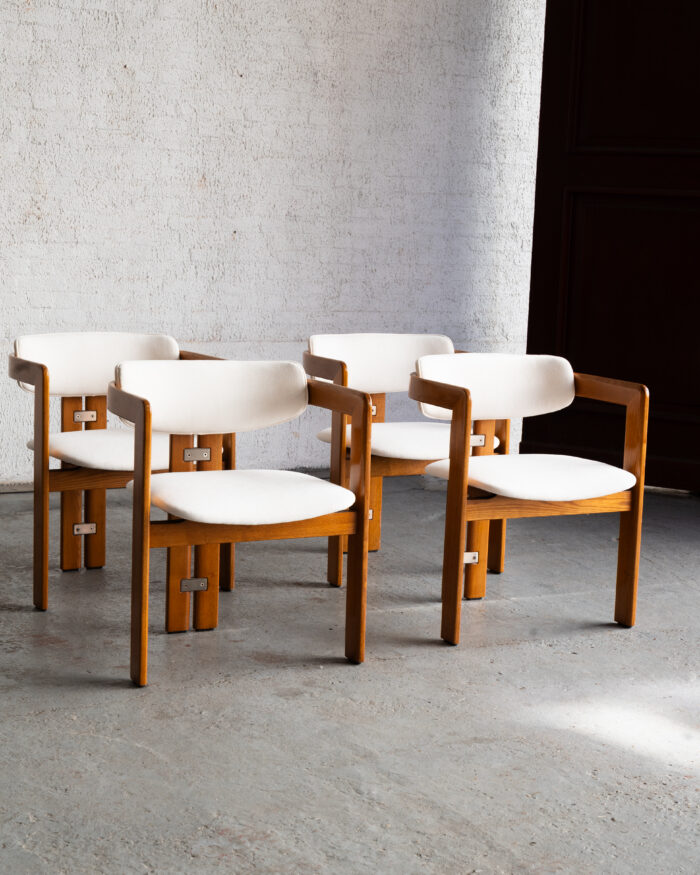
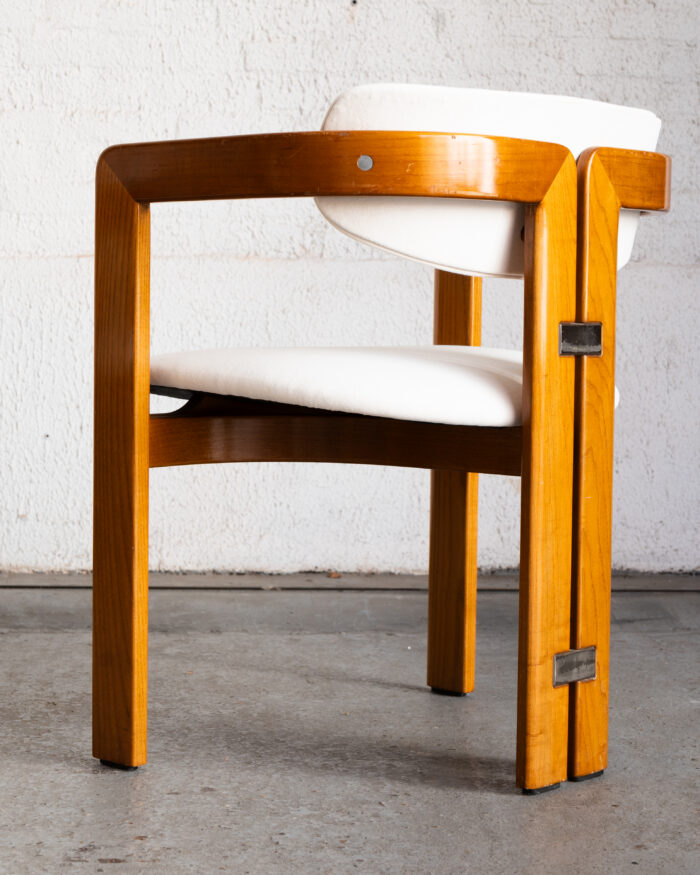
A set of 8 dining chairs, model 7512, designed by Rud Thygesen & Johnny Sørensen for Botium in Denmark in the 1980’s. These chairs are part of the ‘King’ series. The elegant mahogany frames were combined with a cognac leather seating and wicker back. There’s a few small stains on the leather, but further the whole set is in a very good condition. The wicker is intact on all chairs. Producer’s label underneath.
Product / Model
Designer
Manufacturer
Country
Date
Product ID
Price
W: 54 cm
D: 50 cm
H: 83 cm
Seating Height: 44 cm
Armrest height: 63 cm
Weight: approx. 6 kilo / piece
Material: mahogany, wicker
Rud Thygesen was born in 1932 in Denmark where he pursued a formal training in furniture design at the Royal Danish Academy of Fine Arts on the School of Architecture. It was here that he met with Johnny Sørensen (1944), a fellow student who would become his lifelong design collaborator. Their shared vision for furniture innovation led to a partnership that lasted for decades.
Thygesen and Sørensen established their design studio in 1966 and soon gained recognition for their fresh ideas on Danish furniture design. They became known for their use of new production techniques, particularly laminated and molded plywood, which allowed for elegant yet functional designs. The main influence on their work came from Bauhaus principles, emphasizing clean lines, minimal ornamentation, and the combination of aesthetics with practicality.
In the 1970’s the duo got notority for their 9000-series chairs, created for Magnus Olesen. These molded plywood chairs were widely used in public institutions, offices and restaurants. Their lightweight yet sturdy construction made them highly functional and visually appealing. Their designs won multiple awards, and their work was exhibited internationally, cementing their reputation in Scandinavian design history. Unlike some designers who focused on luxury furniture, Thygesen and Sørensen aimed to create high-quality yet accessible designs, making their work widely used in public spaces.
In 1995, after almost 30 years of cooperation, they decided to end the successful partnership to pursue individual careers. Thygesen continued working as a designer. Many of his and Sørensen’s pieces remain in production today, particularly through manufacturers like Magnus Olesen.