


Coffee table ‘Daft Punk’ by Daft Punk & Tom Dixon
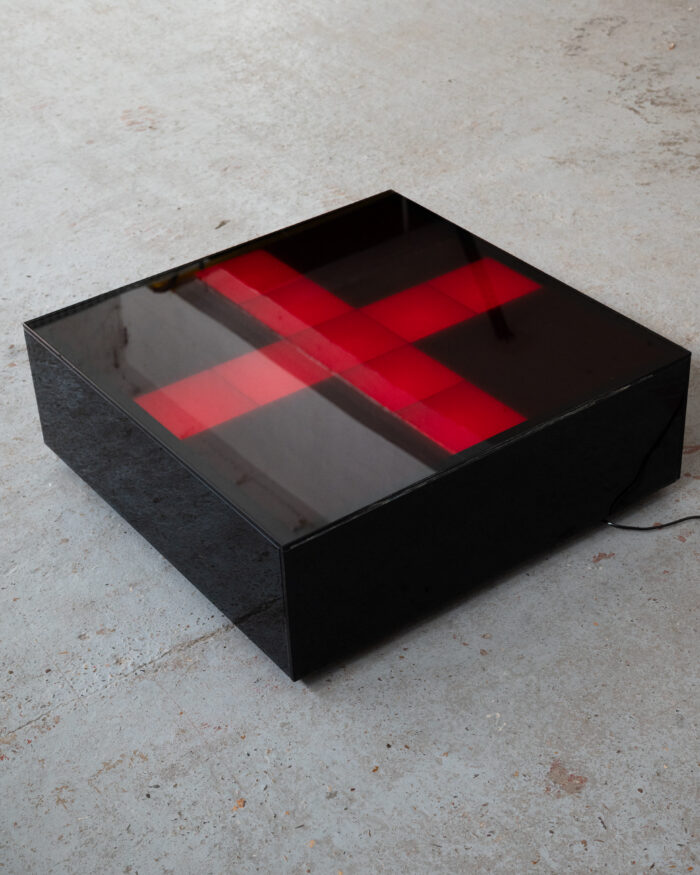
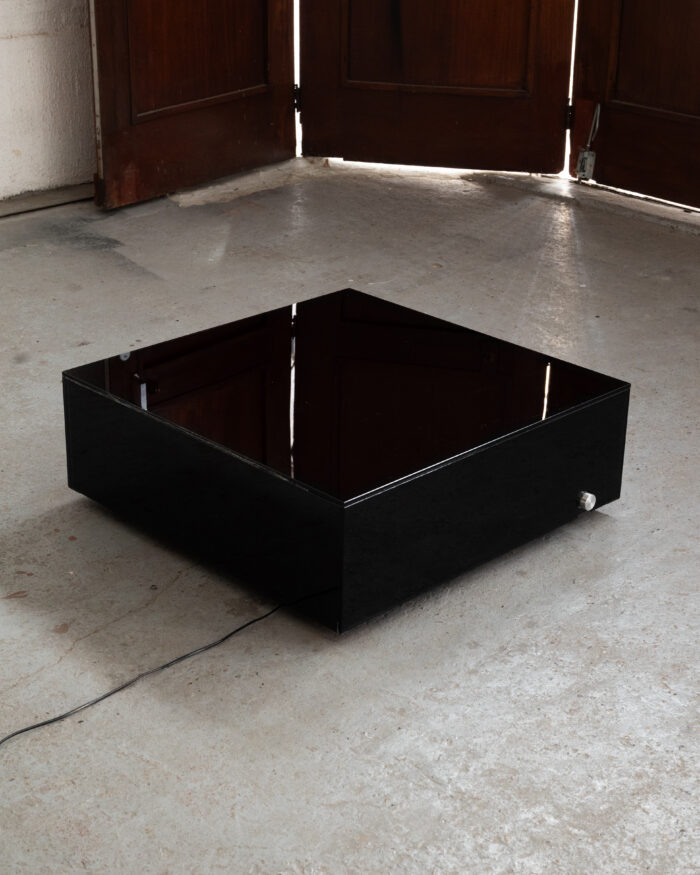
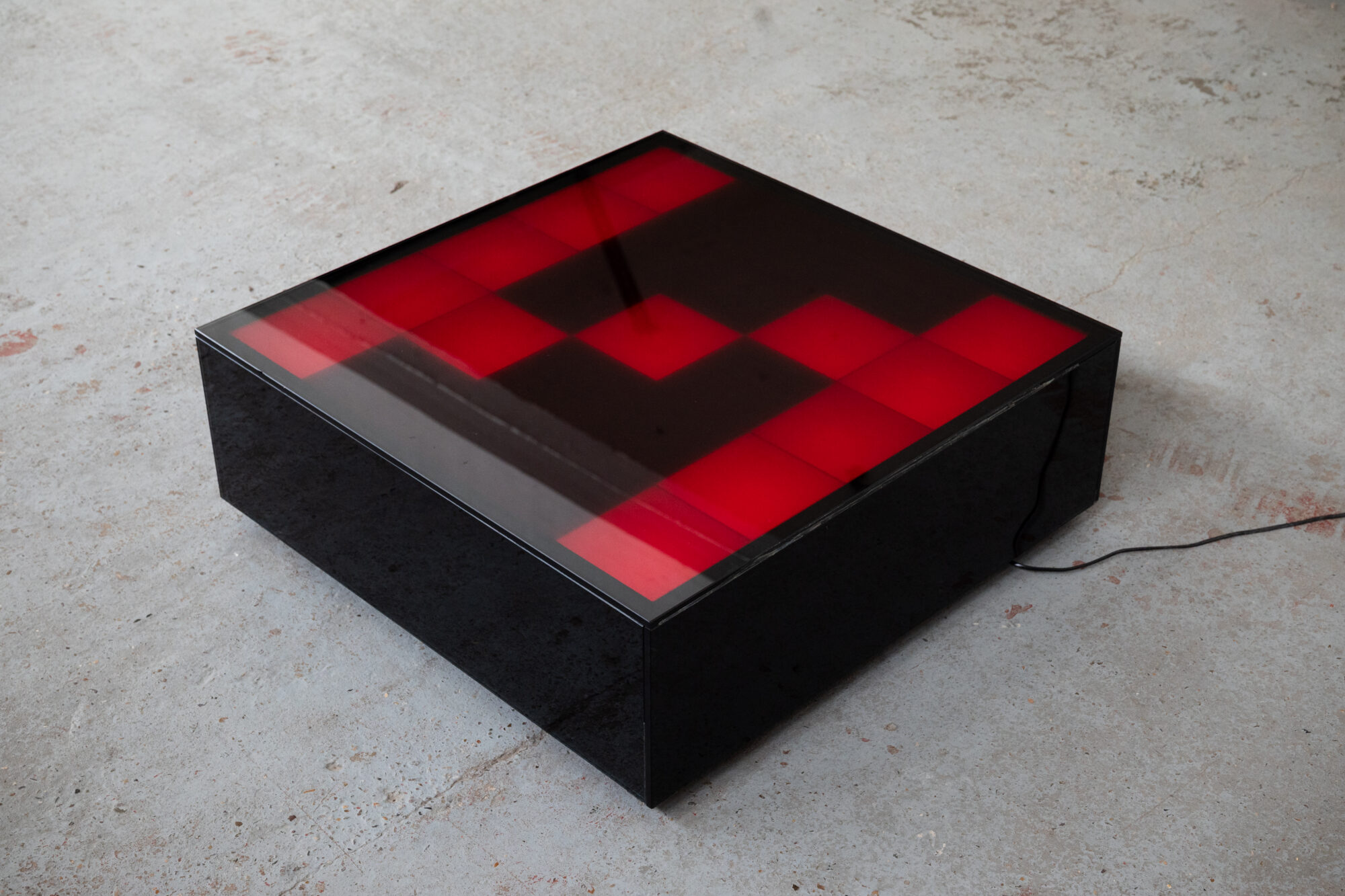
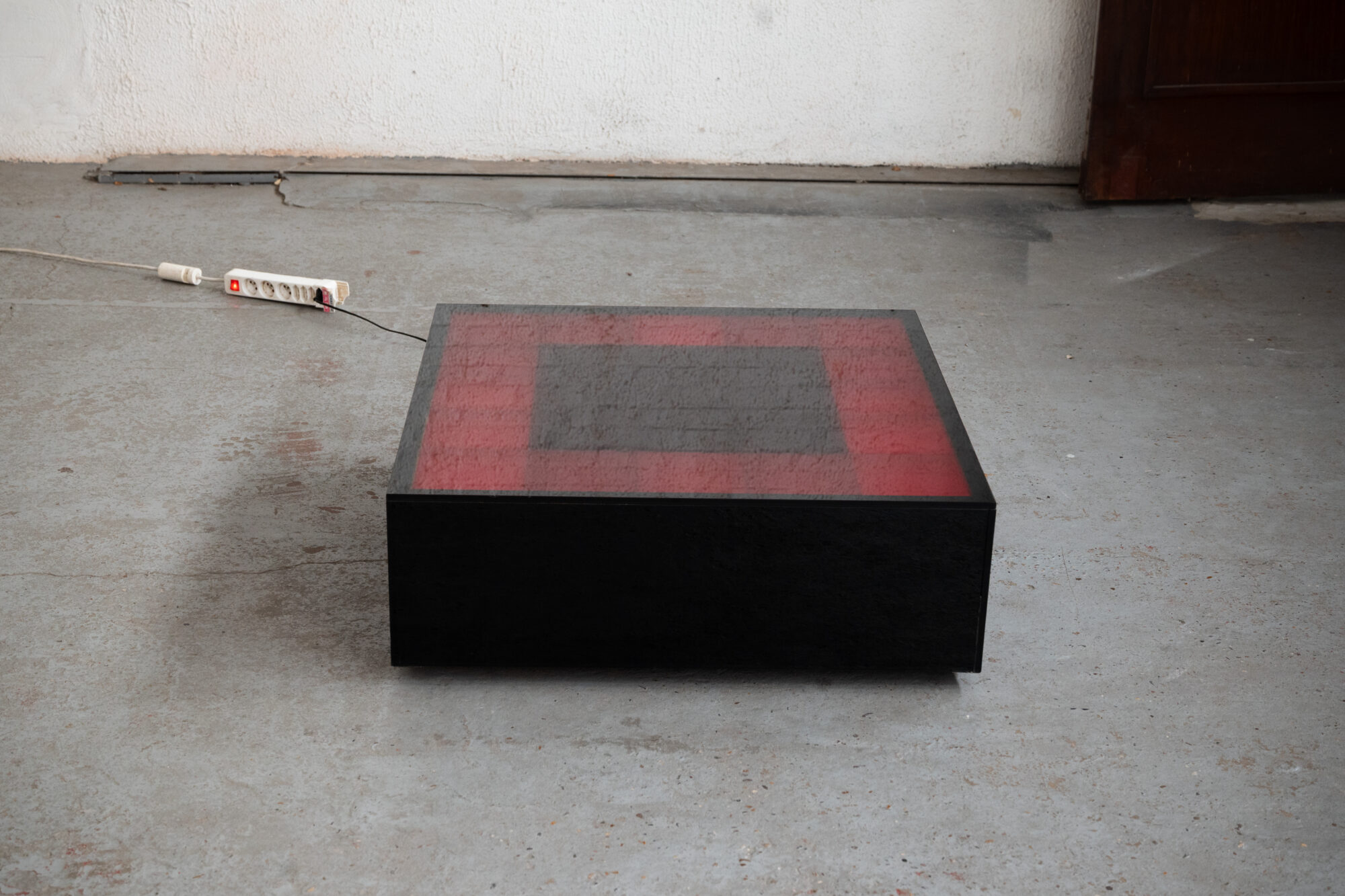
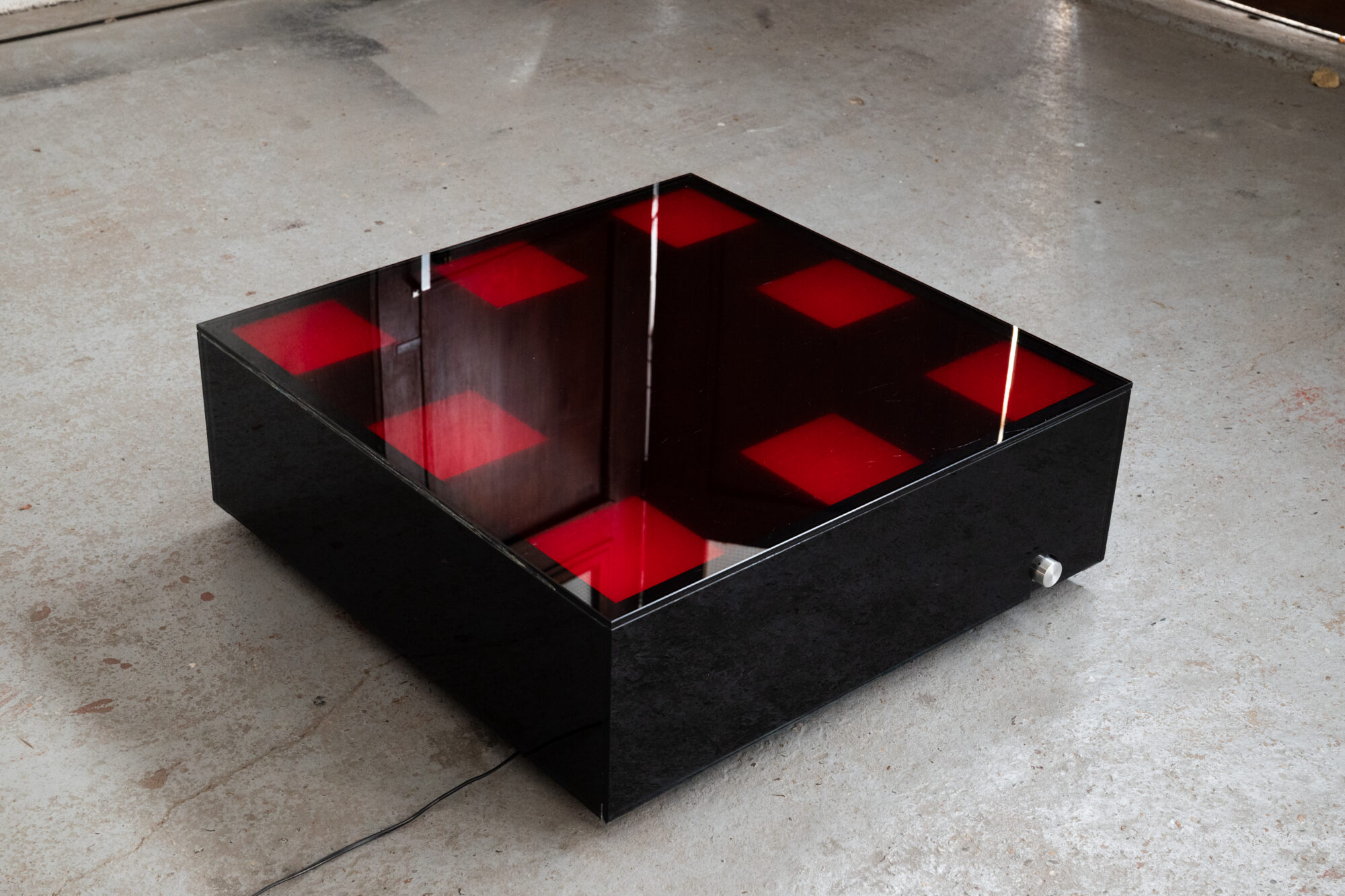
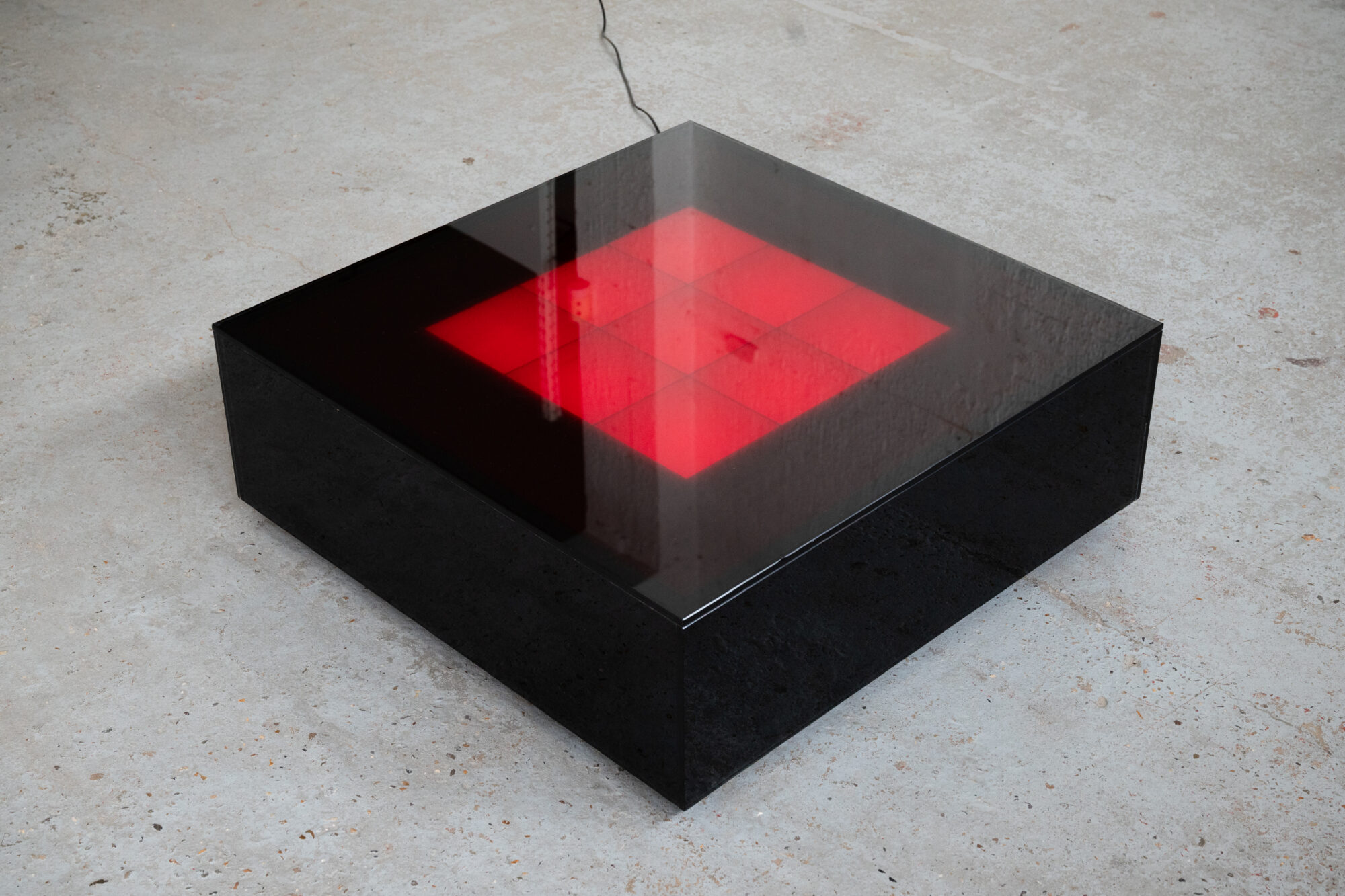
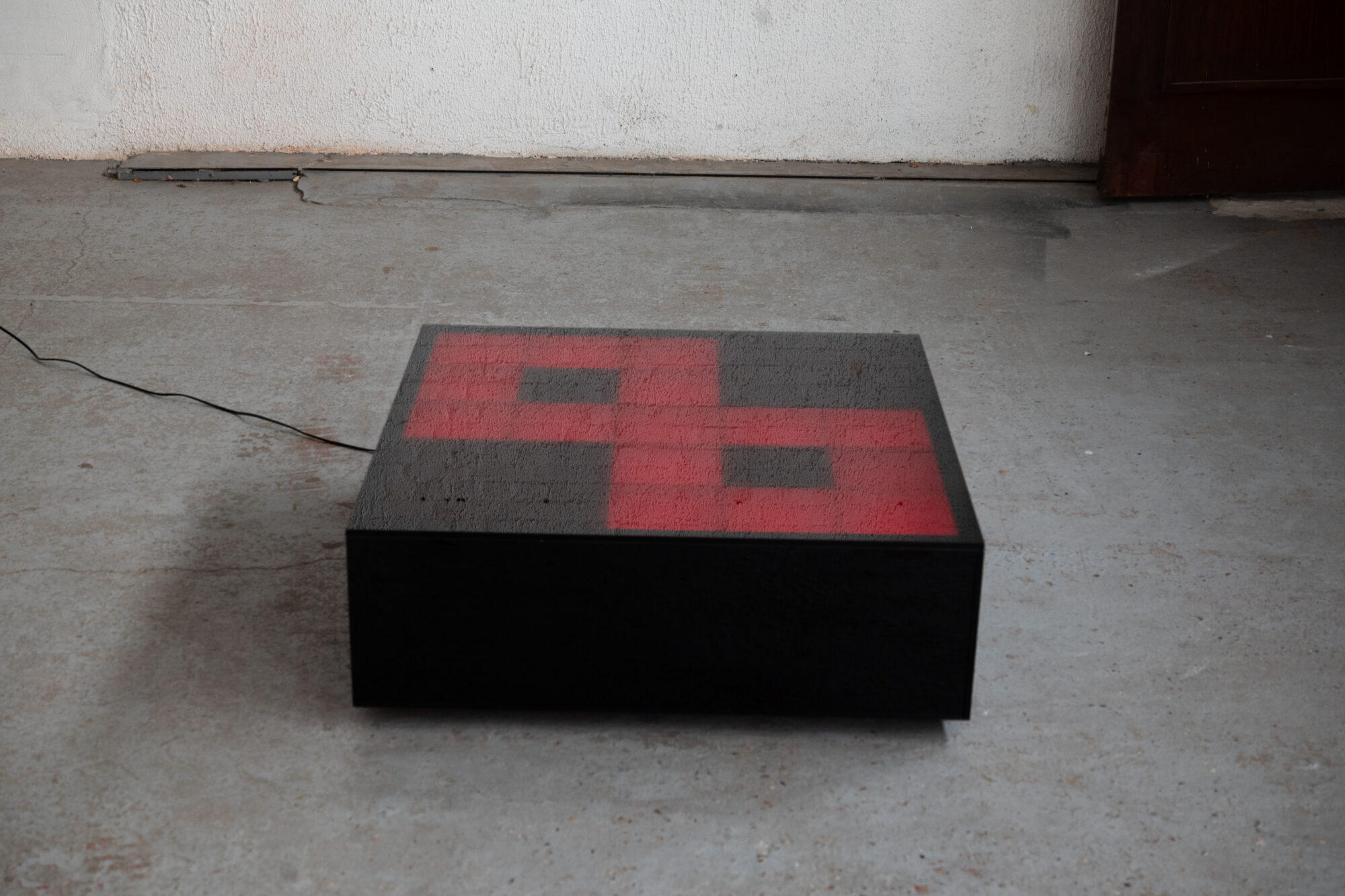
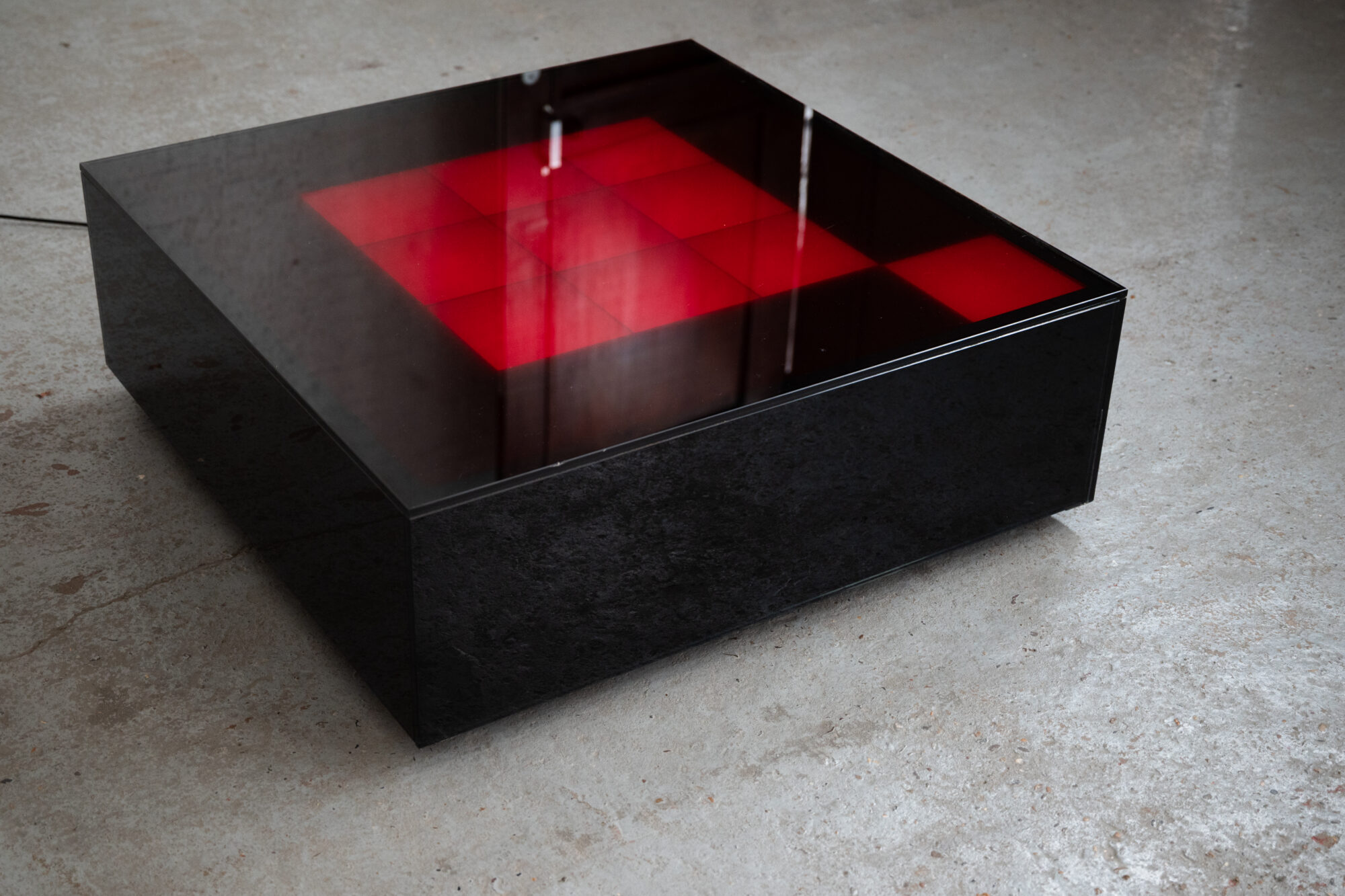
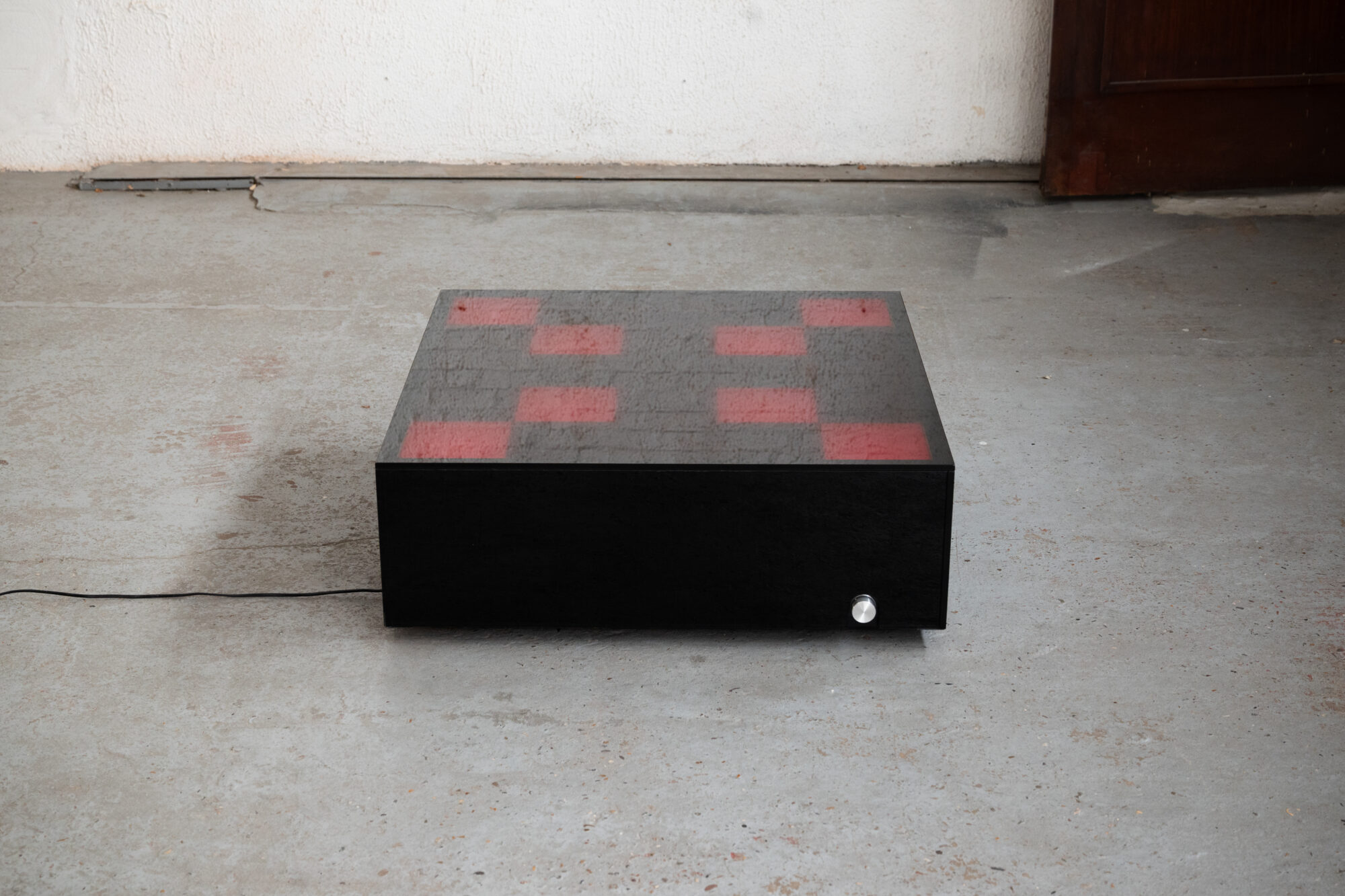
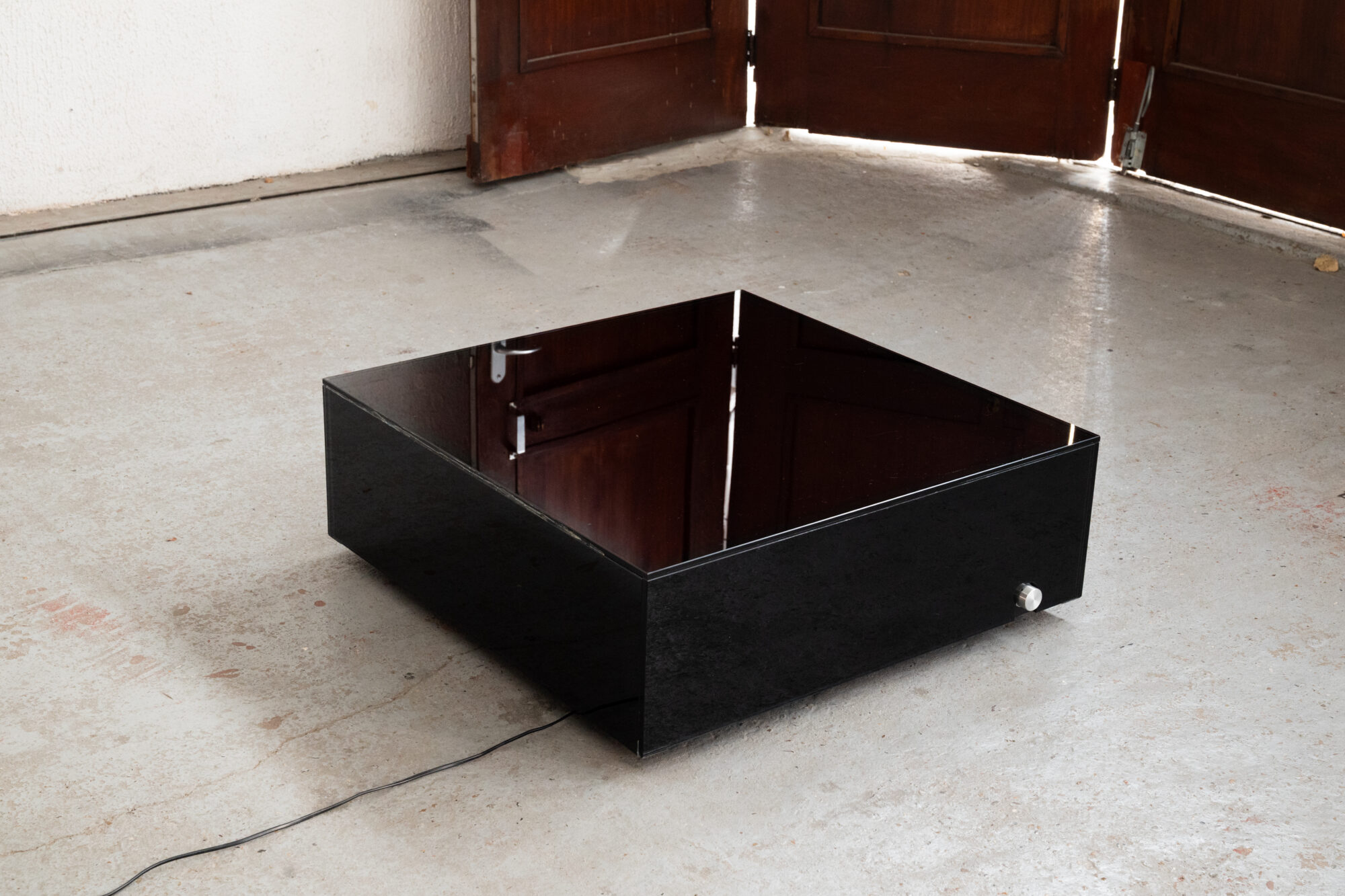
Exceptional and rare illuminated coffee table designed by Tom Dixon in collaboration with the French electronic duo Daft Punk, produced in Italy for Habitat UK in 2004. This futuristic piece consists of a dark smoked glass cube with integrated rectangular red light modules, which can be programmed to illuminate randomly or react to external sound and music. The 10 different lighting modes can be selected using the rotary controls positioned on the side of the table.
Produced by Habitat in a limited edition of 1,000 pieces, this table is a remarkable example of early 2000’s experimental design, bringing together furniture, technology and electronic music culture. A highly collectible piece for both design and Daft Punk enthusiasts.
Daft Punk’s collaboration with Tom Dixon came about during Dixon’s time as creative director of Habitat. The project was part of a series of collaborations with artists and creatives from different fields, resulting in a number of unusual objects that reflected their makers’ personalities and interests.
The Daft Punk table is particularly distinctive for its integration of lighting technology into a functional piece of furniture. The dark glass construction houses illuminated red squares which can operate in different modes, including sequences triggered by sound or music and moving around to the beat. The result is a piece that feels as much like an electronic instrument as a coffee table.
With its combination of retro-futuristic aesthetics, interactive technology and the unmistakable visual language associated with Daft Punk, the table has become one of the duo’s most unusual design objects. Originally produced in an edition of 1,000 pieces, surviving examples are increasingly sought after by collectors of contemporary furniture, electronic music memorabilia and early 2000’s design.
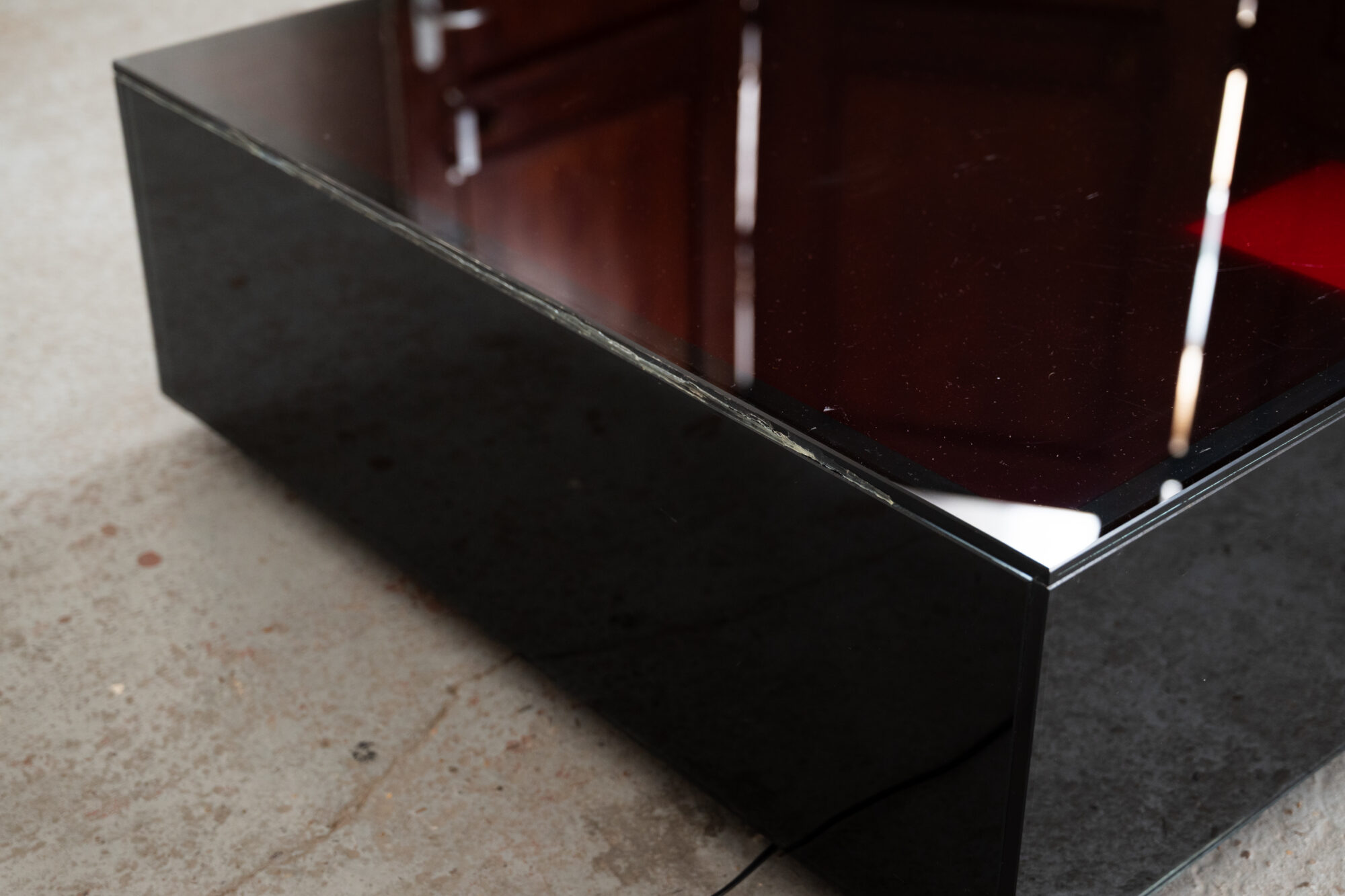
This one is an original table that has been labeled by Habitat and is fully working. The leds and 10 different programs work perfectly and the light patterns move to the rhytm of the music playing in the room. The top glass plate edge on the side with the plug has lost some small glass chips and is protected with silicone to prevent any further crackling. The top has some fine scratches too but overall the table is in a good vintage condition.
Product / Model
Designer
Manufacturer
Country
Date
Product ID
Price
Dimensions:
W: 82 cm
D: 82 cm
H: 29 cm
Weight: approx. 50 kilo
Material: Smoked glass, metal, electronic components
Born in Tunisia in 1959 and raised in England, Tom Dixon emerged in the 1980s as a largely self-taught designer, initially making sculptural furniture from welded salvaged metal. His experimental approach and interest in industrial materials quickly established him as one of Britain’s most distinctive contemporary designers. After becoming Head of Design at Habitat in 1998, Dixon went on to become the retailer’s Creative Director, where he sought to revive the company’s original spirit of experimentation and broaden its relationship with contemporary culture.
Daft Punk, formed in Paris in 1993 by Thomas Bangalter and Guy-Manuel de Homem-Christo, had meanwhile become one of the defining acts of the French electronic music scene. Following the success of Homework and Discovery, the duo had developed an aesthetic that extended far beyond music, combining electronic sound, futuristic imagery, machinery and a fascination with the relationship between technology and human experience. They even performed dressed as robots.
In 2004, Dixon invited Daft Punk to participate in Habitat’s Very Important Collection, a special series of 22 products created with figures from the worlds of music, fashion, film, literature and sport. Rather than simply applying the duo’s identity to an existing piece of furniture, the collaboration resulted in an object directly connected to their musical universe: a black glass coffee table incorporating illuminated red squares whose patterns could change randomly or respond to music.
The table anticipates the visual language that would soon define Daft Punk’s live performances. From their 2006 Coachella show and onwards, the duo appeared on stage as their robotic alter egos, performing their legendary ‘Alive’ tour within a monumental illuminated pyramid. Their combination of electronic music, programmable light, futuristic costumes and architectural stage design blurred the boundaries between concert, technology and performance art.
So this 2004 table wasn’t just a piece of furniture that happened to be designed by musicians. It sits right in the period when Daft Punk were turning their music into an entire visual and technological universe. The result occupies an unusual position between furniture, lighting and electronic object. Produced by Habitat in an edition of 1,000, the table captures a particular moment in which contemporary design, popular culture and emerging digital technology were beginning to overlap.
We ship worldwide using trusted transport partners. Shipping costs depend on the item’s size, weight, value, and material. Each item is carefully packed using protective materials and, if needed, custom-made wooden crates. For overseas shipping, we always recommend crating.
Domestic Deliveries: In some areas we offer personal one man delivery at starting rates of 60 euro (Antwerp city and its districts). For other domestic destinations we work with Brenger at their rates, plus packing and handling fee. International Deliveries: We partner with trusted couriers like Magic Movers and Convelio. Once the item leaves our warehouse, the shipper bares full responsibility for any damage that may occur during handling or transport . We can offer shipping with full insurance. We kindly ask that you inspect your items upon delivery. Please check if your order is complete and unharmed. If you notice any issues, let us know right away so we can find a solution for you and any other party involved.