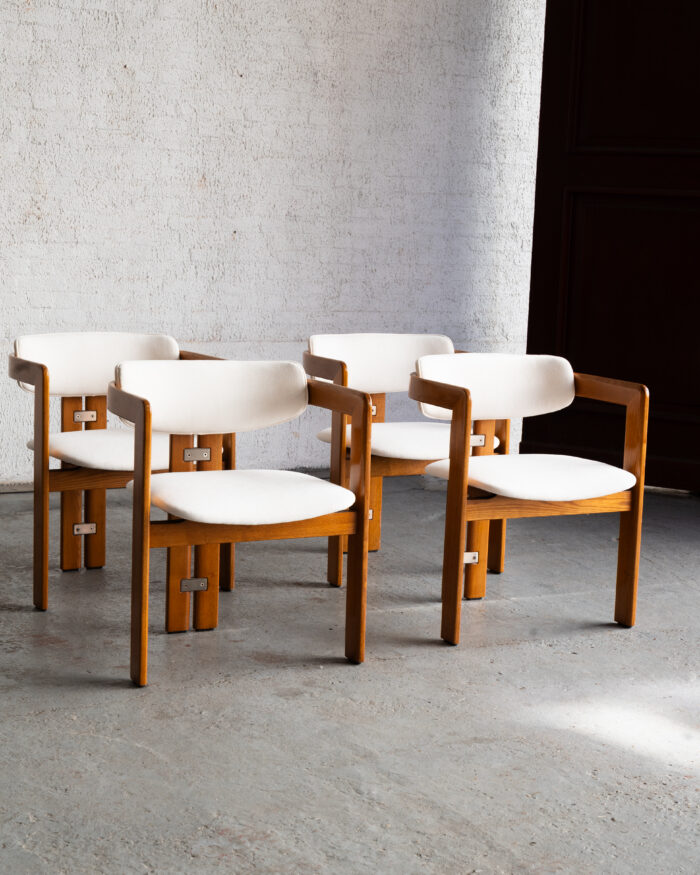
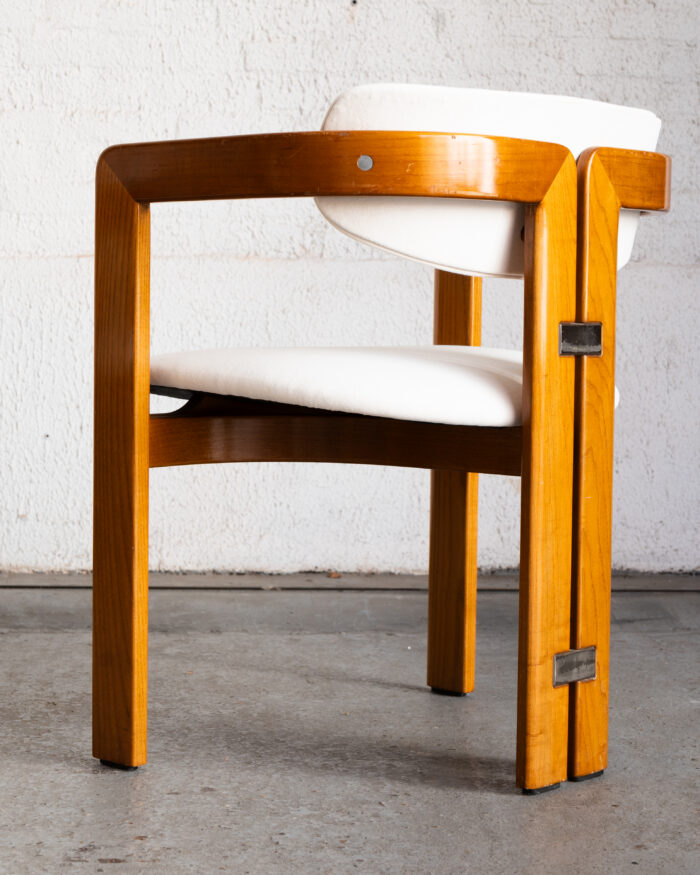
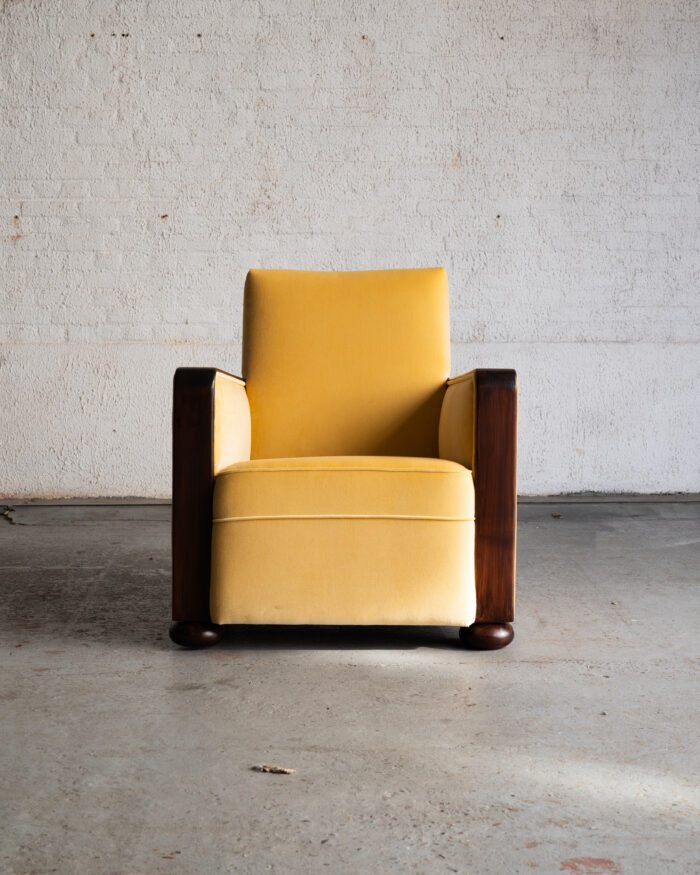
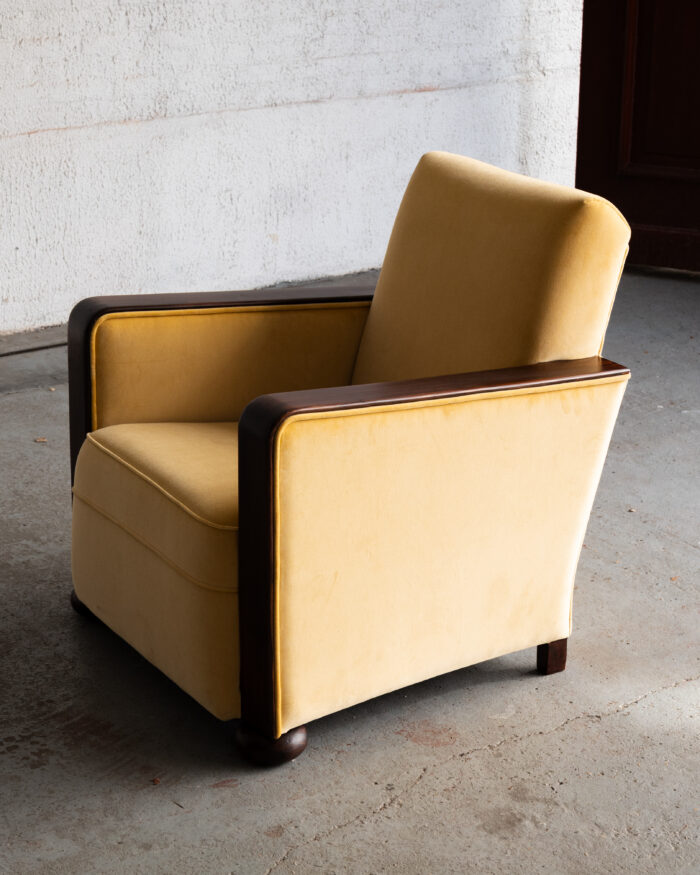
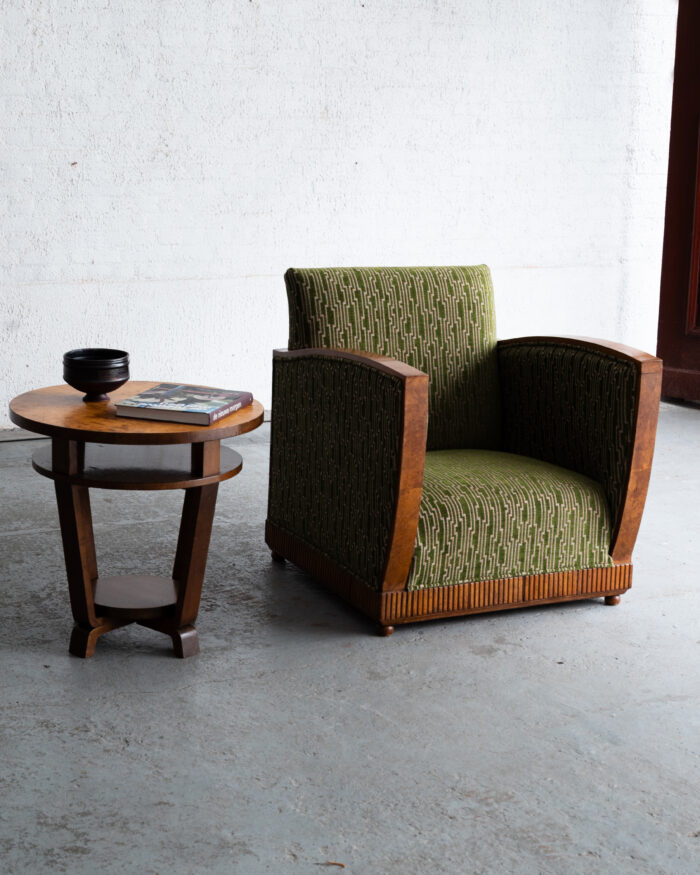
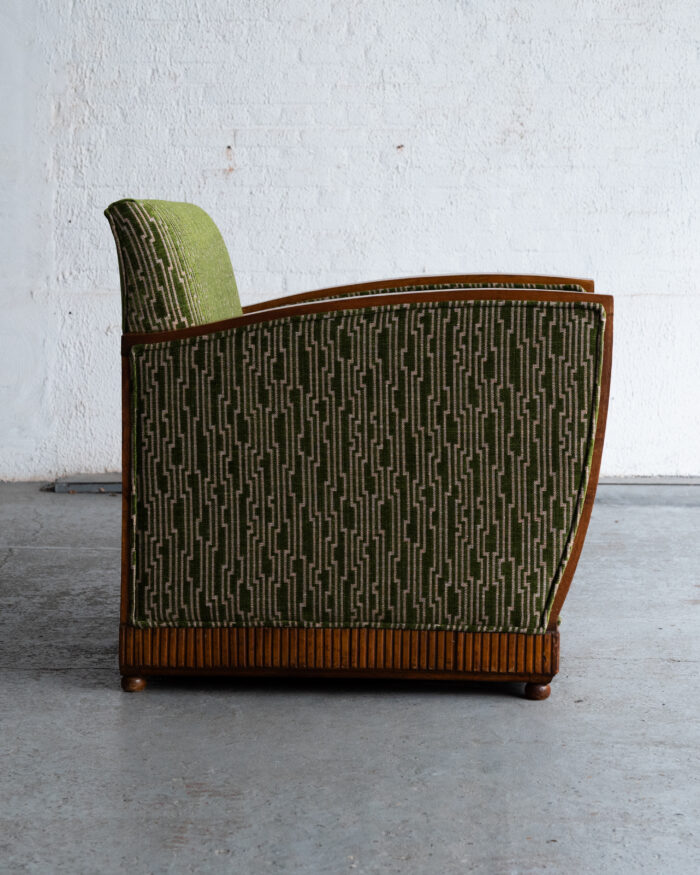
Set of 8 dining chairs by Nanna Ditzel (Sold)
Set of 8 dining chairs ‘model ND-150’ designed by Nanna Ditzel and produced by Poul Kolds Denmark during the 1960’s. These elegant chairs are minimalistic, yet very comfortable. The rosewood seats and backrests shows some using marks but overall they are in very good, fully restored condition. The metal frames show no signs of rust. It’s rare to find a set of 8 of these chairs in this condition.
Product / Model
Designer
Manufacturer
Country
Date
Product ID
Price
Dimensions:
W: 64 cm
D: 64 cm
H: 73 cm
Seating H: 43 cm
Weight: approx. 7 kilo/ chair
Material: Rosewood, metal
Nanna Ditzel (1923–2005) was one of the most important figures in Danish and international design, often described as a pioneer who helped expand Scandinavian modernism beyond strict functionalism toward a more expressive, human-centred language.
Trained first as a cabinetmaker and later at the Danish School of Arts and Crafts and the Royal Academy in Copenhagen, she combined deep respect for craftsmanship with a fearless curiosity for new materials and technologies. Early in her career she worked closely with her husband, architect Jørgen Ditzel, and together they became central contributors to post-war Danish design. After his death in 1961, Nanna Ditzel continued independently and in the late 1960’s she moved to London, where she co-founded the Interspace showroom and engaged more directly with industrial and experimental design, before returning to Denmark in the mid-1980s.
She built a remarkable career at a time when few women were able to gain international recognition in the field. Her work spans furniture, textiles, jewellery, tableware and interiors, and is characterised by organic forms, comfort, playfulness and a strong sensitivity to how the human body interacts with objects. She worked together with brands like Kvadrat and manufacturers like Fredericia.
She was especially interested in creating designs that invited use and movement rather than passive admiration. Iconic works such as the Hanging Egg Chair from 1959 demonstrate her sculptural approach and her willingness to challenge conventional ideas of seating, while later designs like the Trinidad Chair from the 1990s show a refined balance between lightness, structure and visual rhythm. Many of her textile designs, including upholstery fabrics still produced today, reveal her keen understanding of colour, pattern and durability.
Throughout her life she received numerous international awards and honours, and her work has remained in continuous production by leading manufacturers. . She’s often celebrated as a groundbreaking female designer in a field traditionally dominated by men. Her work continues to influence contemporary designers because with her designs she broadened the emotional and expressive range of Scandinavian design.