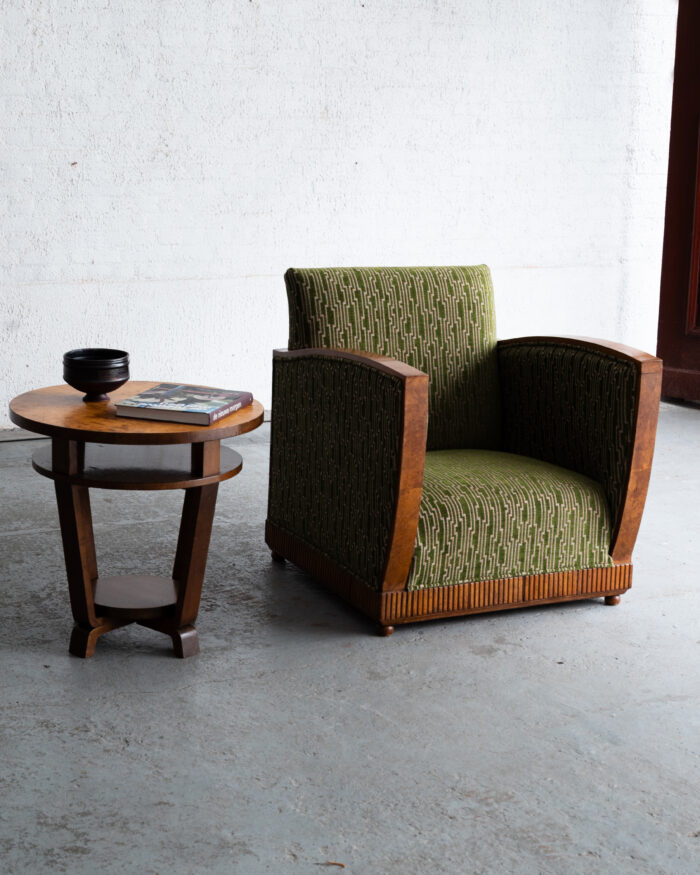
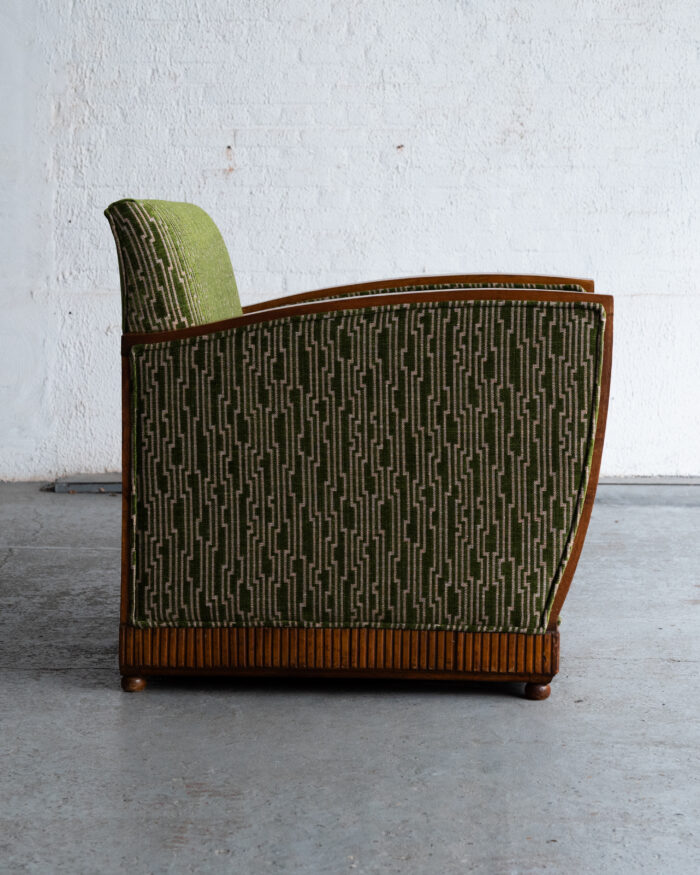
Set of 2 easy chairs attributed to Ib Kofod Larsen (Sold)
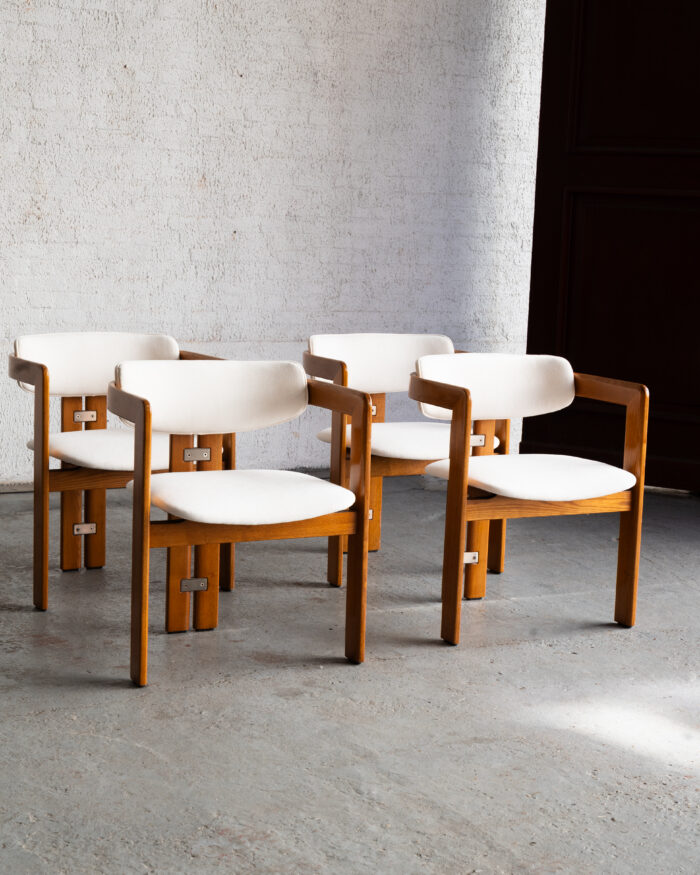
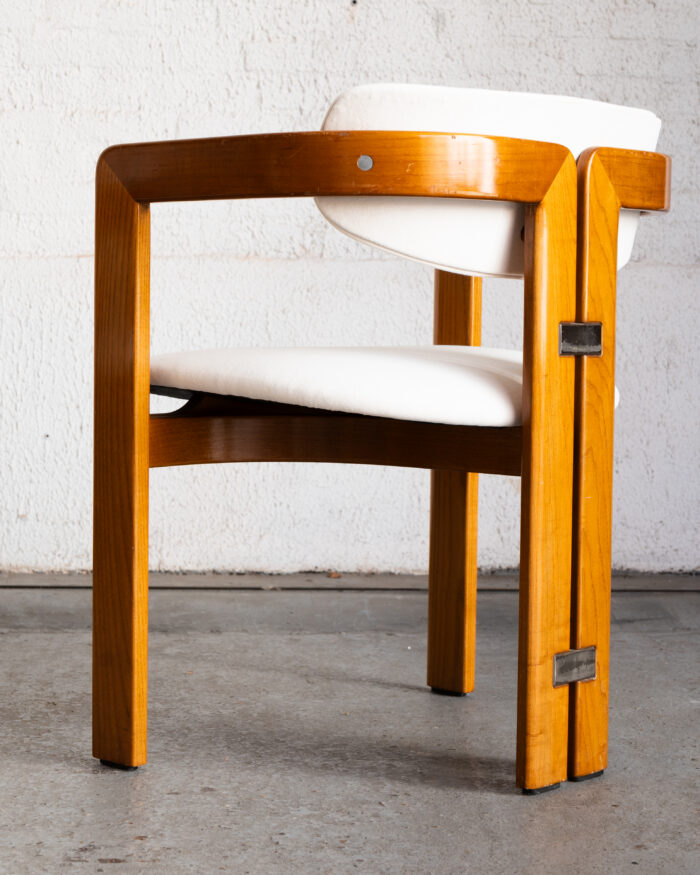
This set of 2 easy chairs are attributed to Ib Kofod Larsen and made in Denmark during the 1960’s. These chairs are in a very good condition, the cushions have been re-upholstered by the previous owner in a short haired oatmeal bouclé fabric. The rattan backrests are patinated but in very good condition, just like the solid teak wood frames. The messing holders for the backrest are the cherry on top on this rare set in excellent condition.
Product / Model
Designer
Country
Date
Product ID
Price
Dimensions:
W: 68,5 cm
D: 68cm
H: 70 cm
Seating H: 35 cm
Weight: approx. 10 kilo /piece
Material:Teak, rattan, messing, bouclé fabric
Ib Kofod-Larsen (1921–2003) was a pioneering Danish architect and designer, best known for his iconic “Seal” and “Penguin” chairs. After studying cabinetmaking and completing his education at the Royal Danish Academy of Fine Arts in 1948, he opened his own studio in Copenhagen.
Kofod-Larsen’s designs spanned furniture, radio and TV cabinets, silverware, and industrial products. His experimental approach led him to collaborate with Dansk Glasfiber Industri in 1953, helping to develop new materials for furniture design.
Practical and beautiful
Larsen’s design philosophy was closely aligned with the values of Danish modernism, which sought to create aesthetically pleasing, yet functional pieces for everyday use. He was a key figure in the Danish Modernism, creating practical and yet beautiful pieces crafted from luxurious woods like teak and rosewood, paired with leather.
His international success grew after he moved abroad, gaining recognition in the US and Europe. He worked with top manufacturers in Denmark and abroad, including High Wycombe, Bovenkamp, and Fredericia Furniture. His most celebrated works include the “Model 66” sideboard (a rosewood version is available in our collection) and the ‘Seal’ ‘Fugu’ and ‘Penguin’ chairs.
Though initially underappreciated in Denmark, Kofod-Larsen’s decision to work internationally marked a turning point in his career, earning him lasting recognition. Today, his designs are treasured by collectors, and he is regarded as a key figure in 1950s Danish modern design.