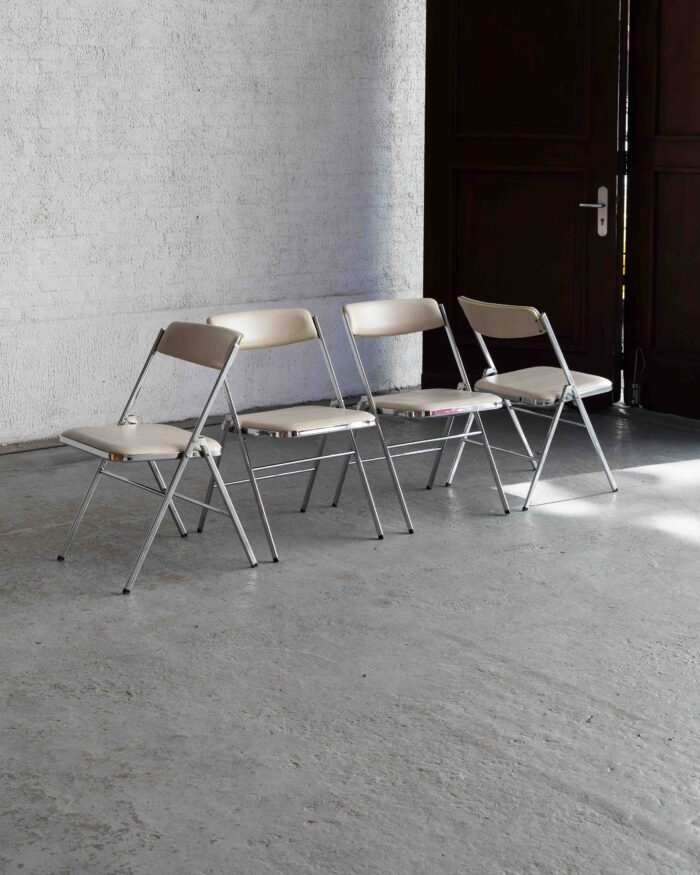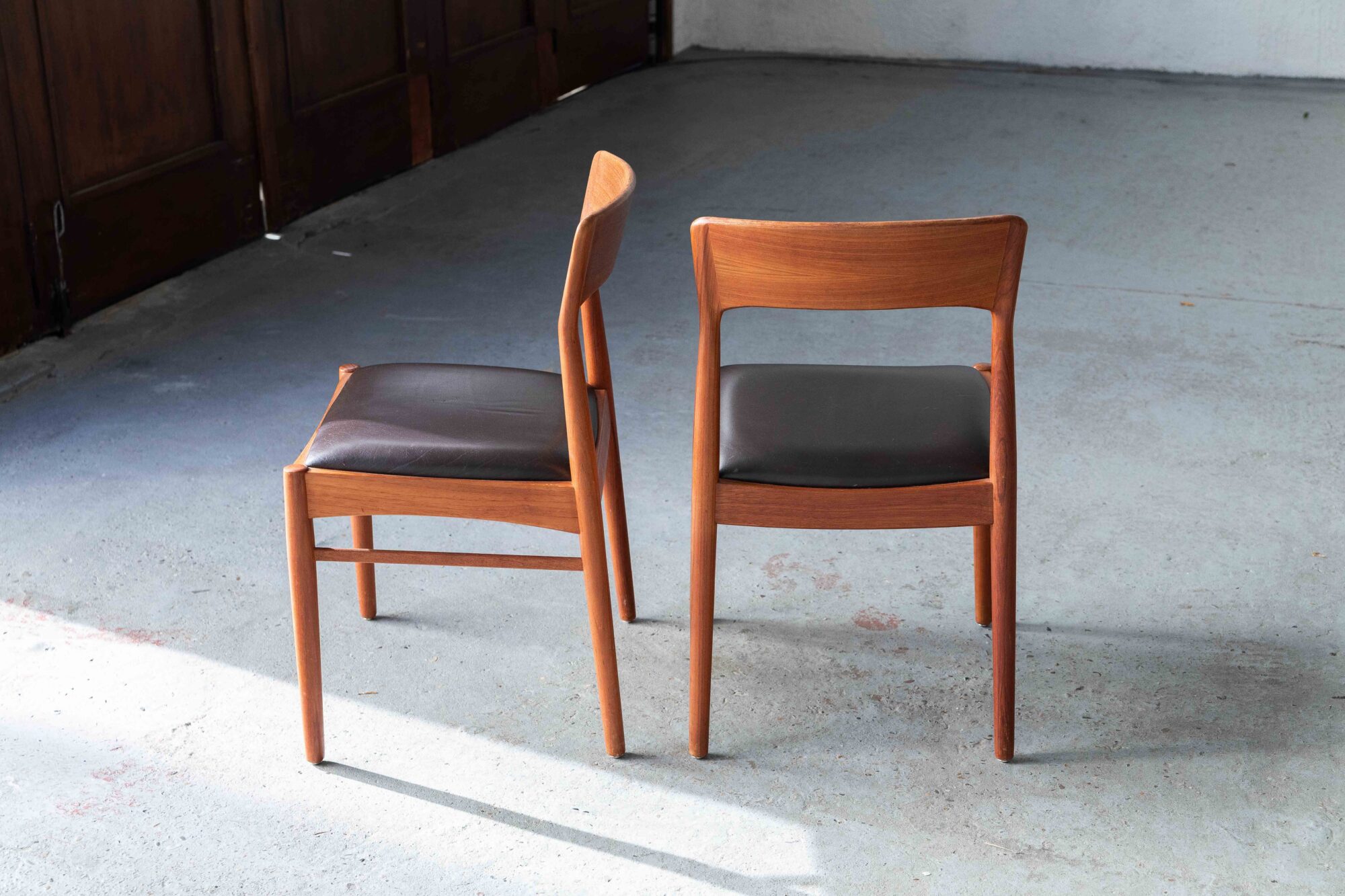





Set of 6 dining chairs by Henning Kjaernulf (Sold)
Set of 6 dining chairs designed by Henning Kjaernulf and produced by KS Möbler in Denmark during the 1960’s. The organically shaped backrest is one of the features that makes this piece a very elegant and comfortable seat. This set has a darkbrown skai upholstery and a solid teak frame. There’s a maker’s stamp underneath of the chairs. A few light using marks on the seats, further in very good condition.
Product / Model
Designer
Manufacturer
Country
Date
Product ID
Price
Dimensions:
W: 47 cm
D: 49 cm
H: 81 cm
Seating H: 45 cm
Weight: approx. 7 kilo/ chair
Material: Solid teak, skai
DESIGNER INFORMATION
Henning Kjaernulf (1911–1975), also known as Henry Kjærnulf, was a Danish designer and architect. His influence on Danish design is well docomented but there’s little known about his personal life.
Kjaernulf studied carpentry and design at the Royal Danish Academy of Fine Arts, equipping him with the skills to craft meticulously detailed wooden furniture. In 1955, he changed his name to Henry Kjærnulf but is widely known by his artist name, Henning Kjærnulf.
Kjaernulf began his design career at various Danish furniture companies, including Bruno Hansen, Poul Hundevad, and Vejen Møbelfabrik. He was particularly influenced by American modern design, which emphasized simplicity and functionality.
During his career, Kjaernulf created many famous designs, including the Model 71 dining chair and the Model 68 dining table for Bruno Hansen. He liked especially to work with natural materials such as wood and leather. A combination of sculptural forms, organic curves, and clean is what characterizes his work.
Among his most iconic creations is the “Razorblade” chair, produced in the 1960s by EG Kvalitetsmöbel. This chair features a distinctive backrest shaped like a razor blade. His works often showcase a harmonious blend of sculpted edges and functional design, reflecting the principles of Danish modernism.
His works continue to be highly regarded and sought after in the design community, but despite his significant impact on Danish design, much of Kjaernulf’s personal life remains enigmatic.