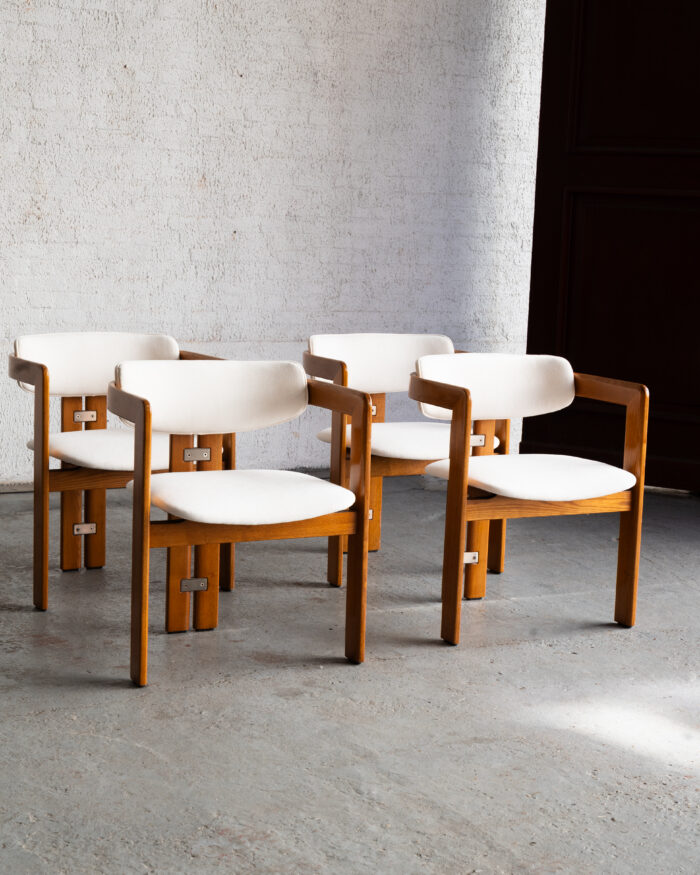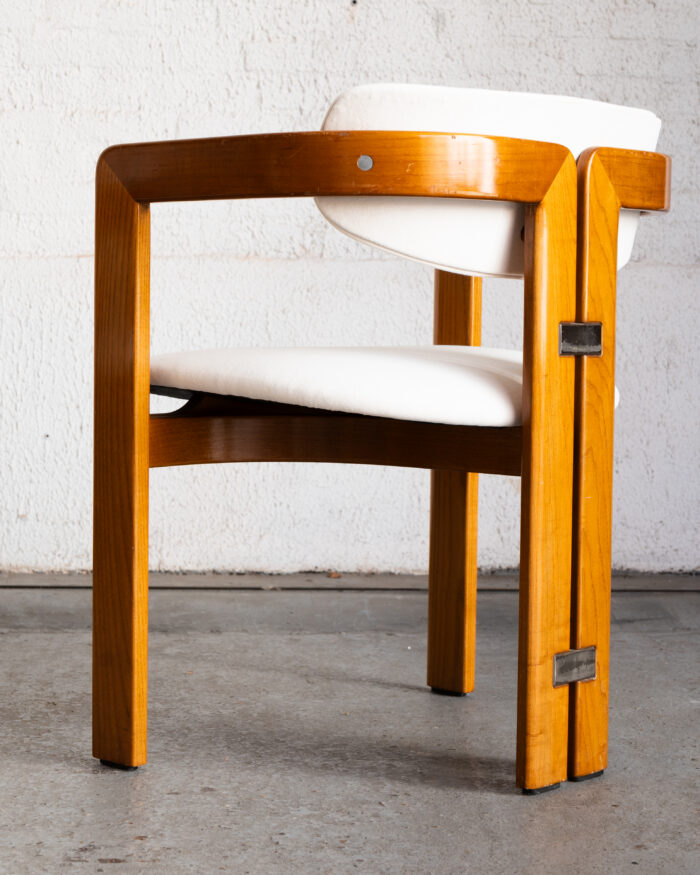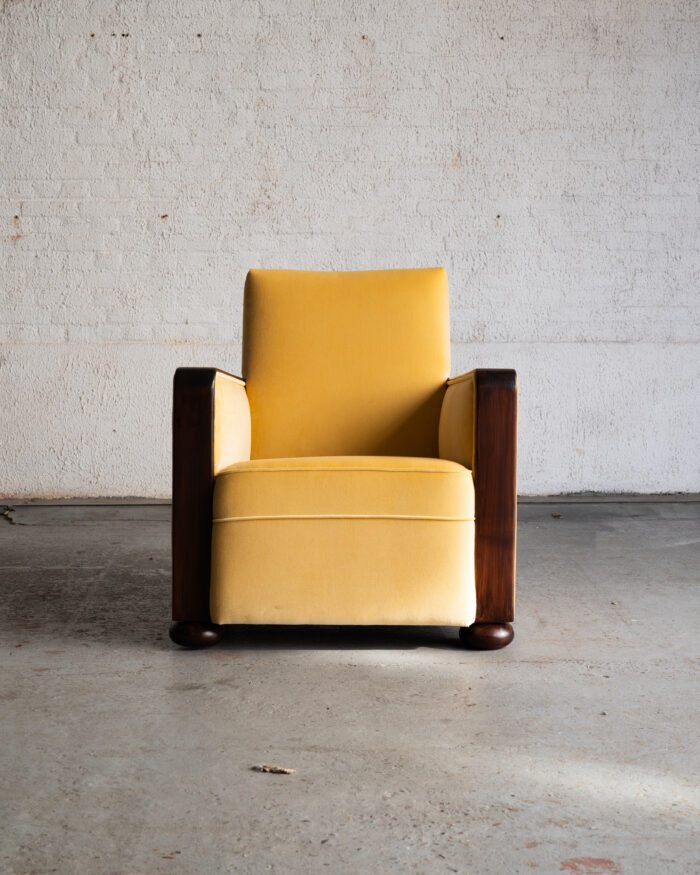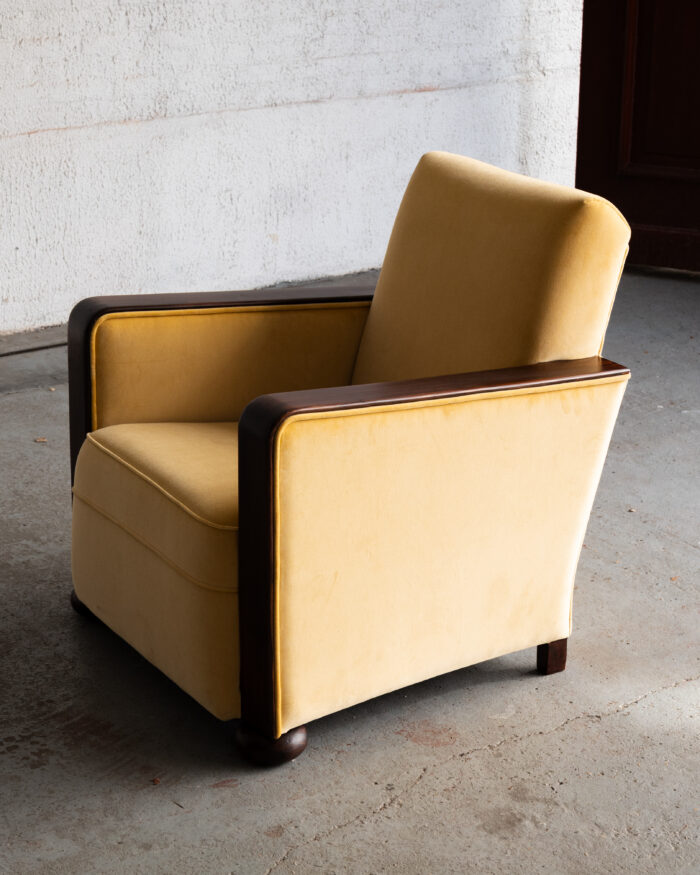



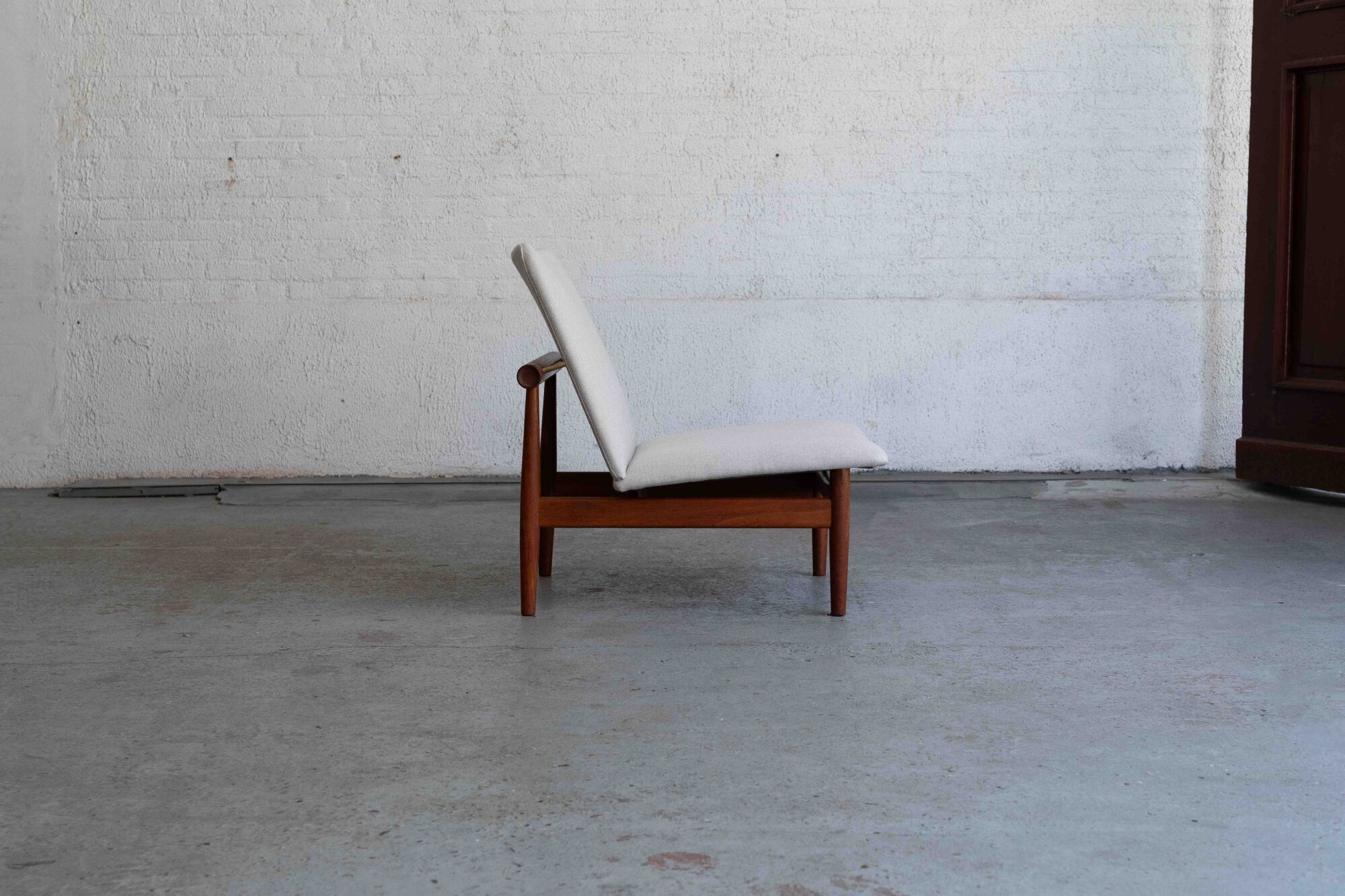
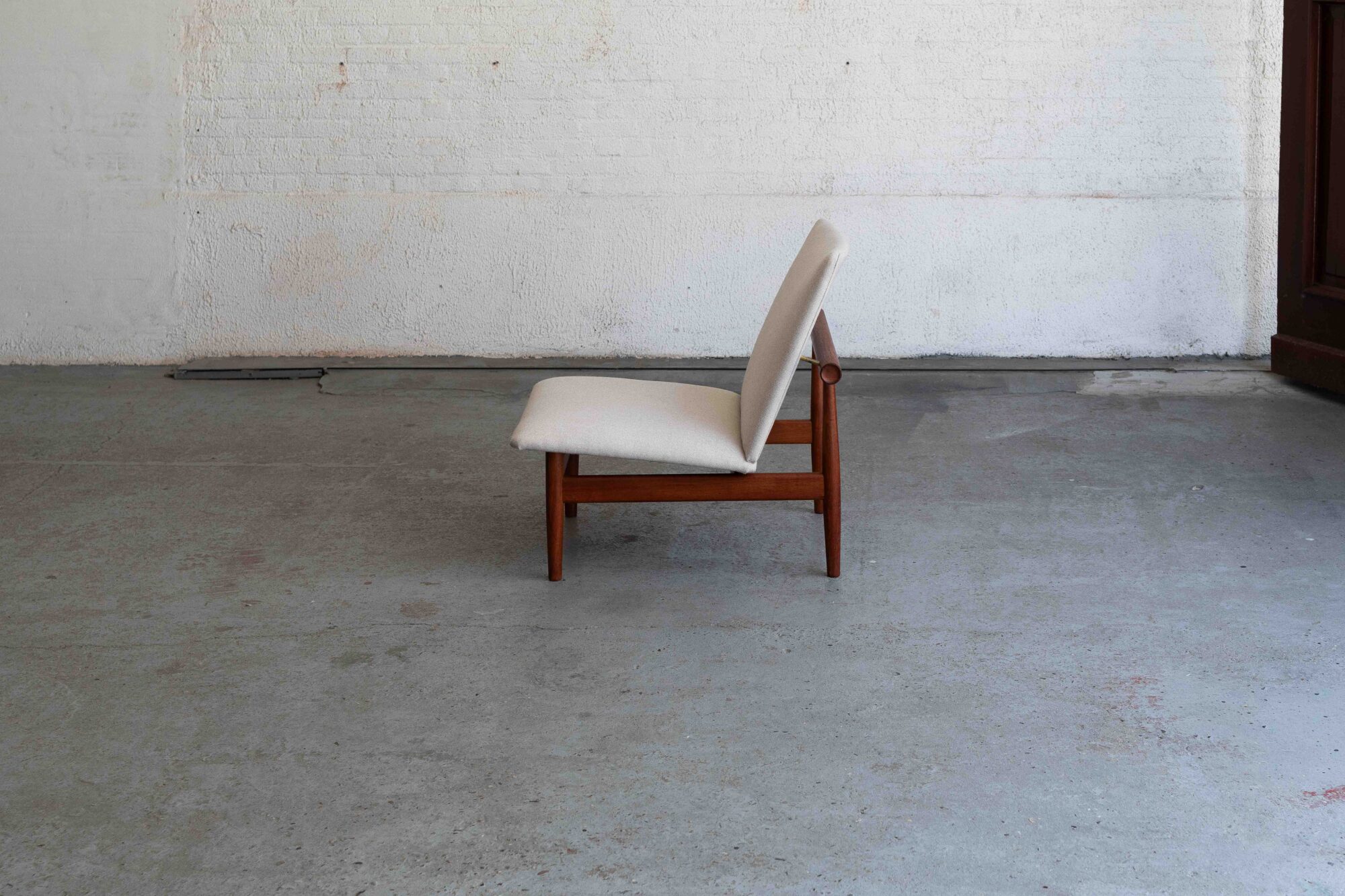
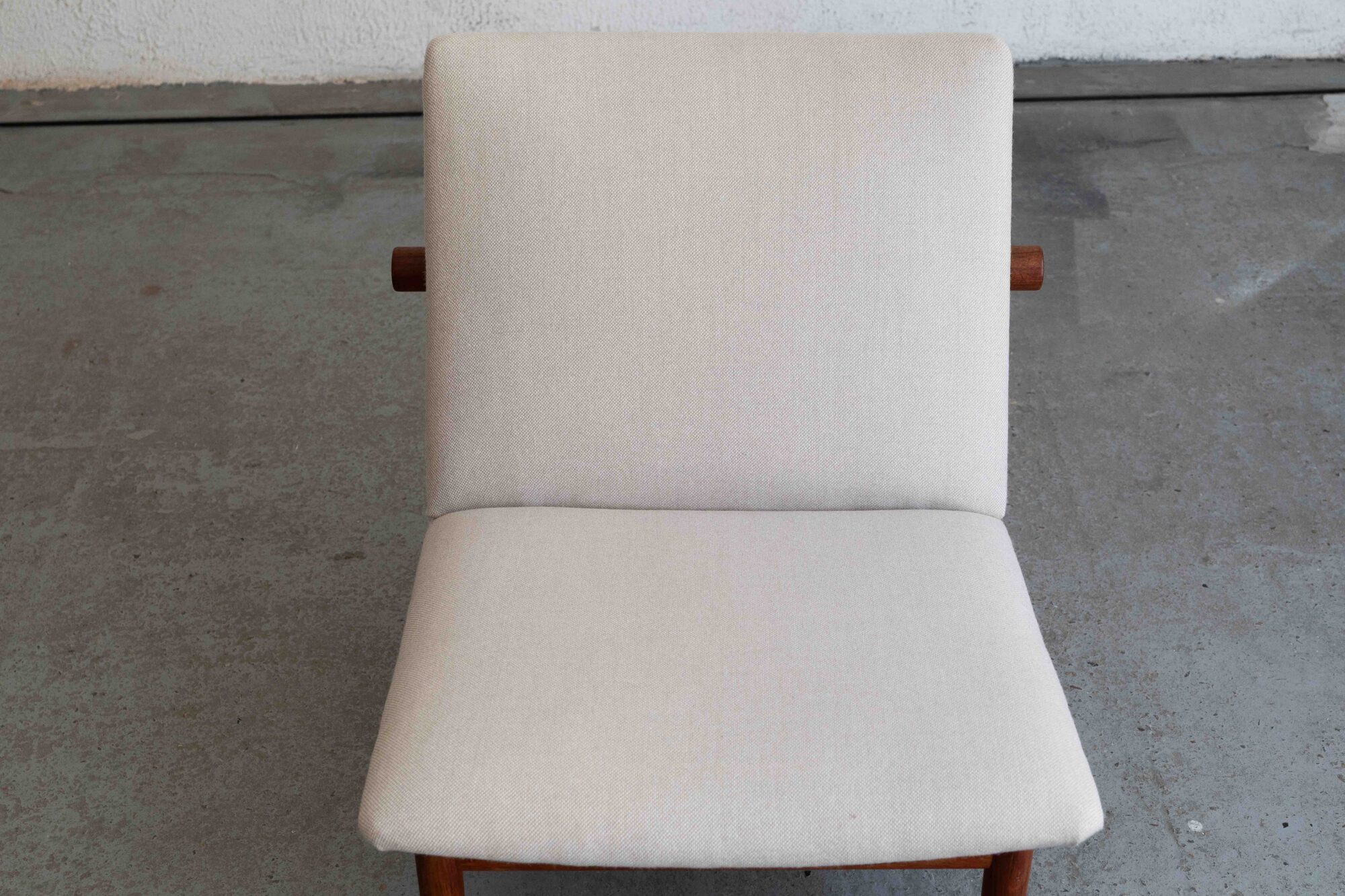
Set of 2 easy chairs by Finn Juhl
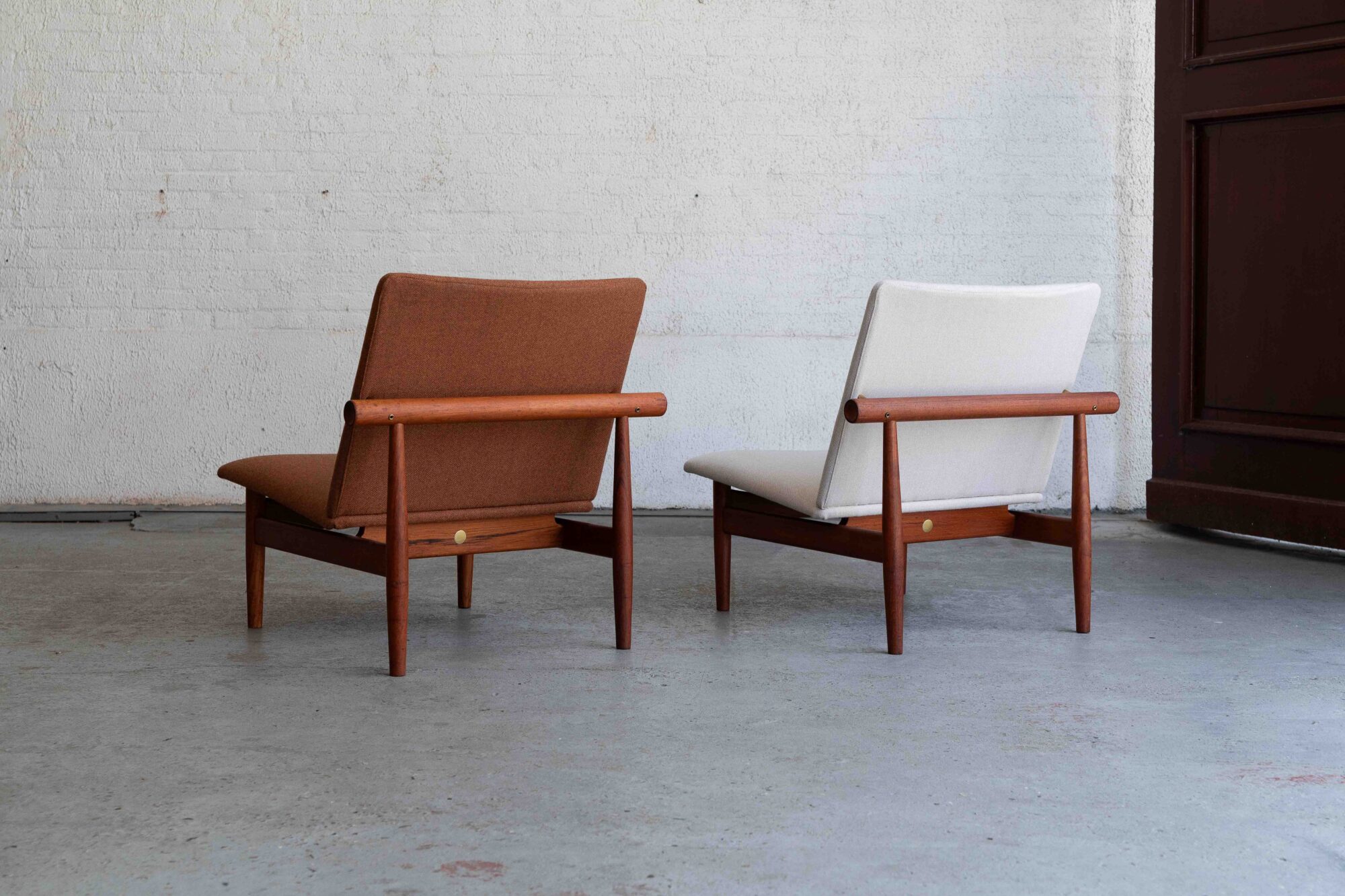
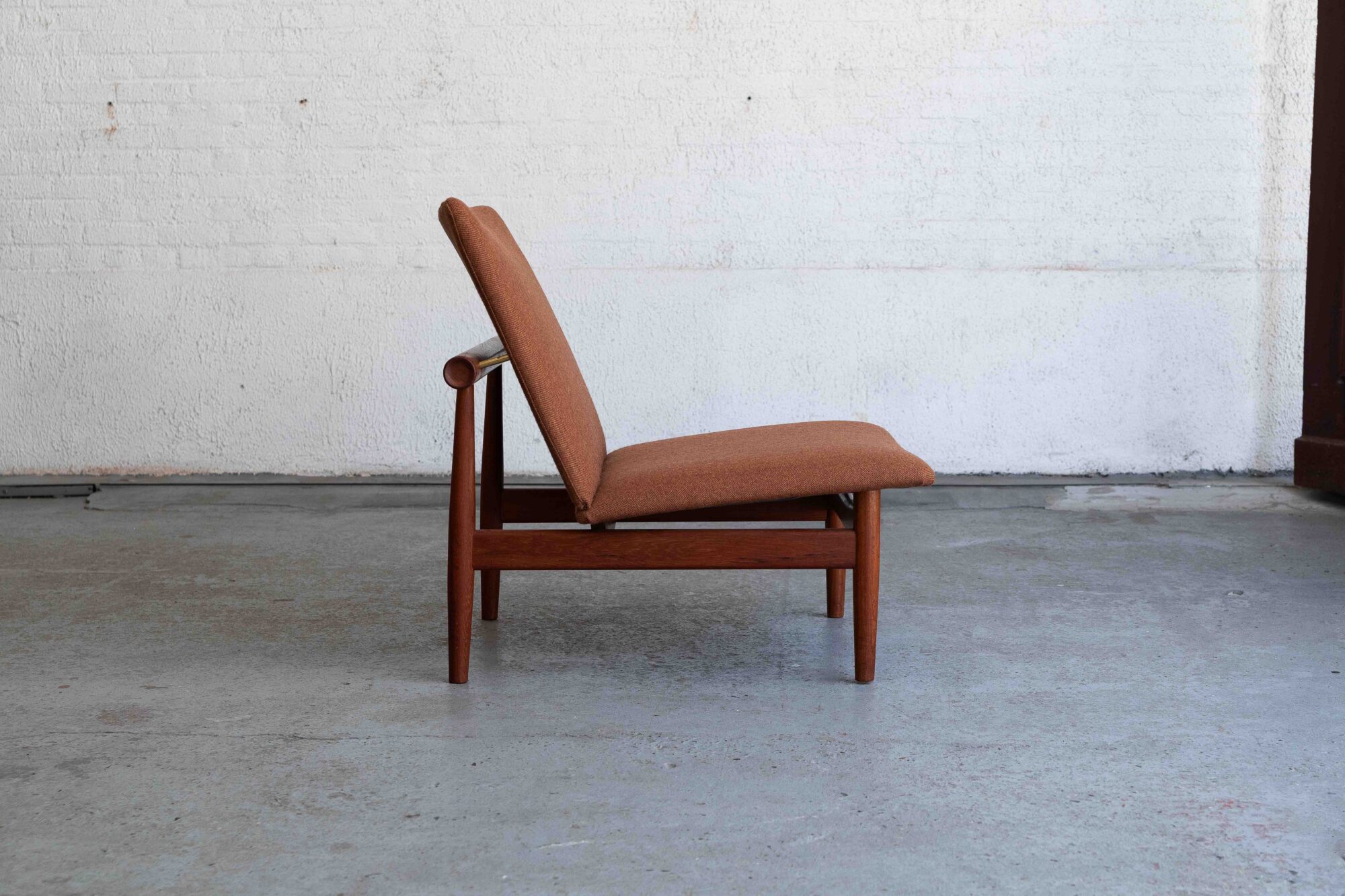
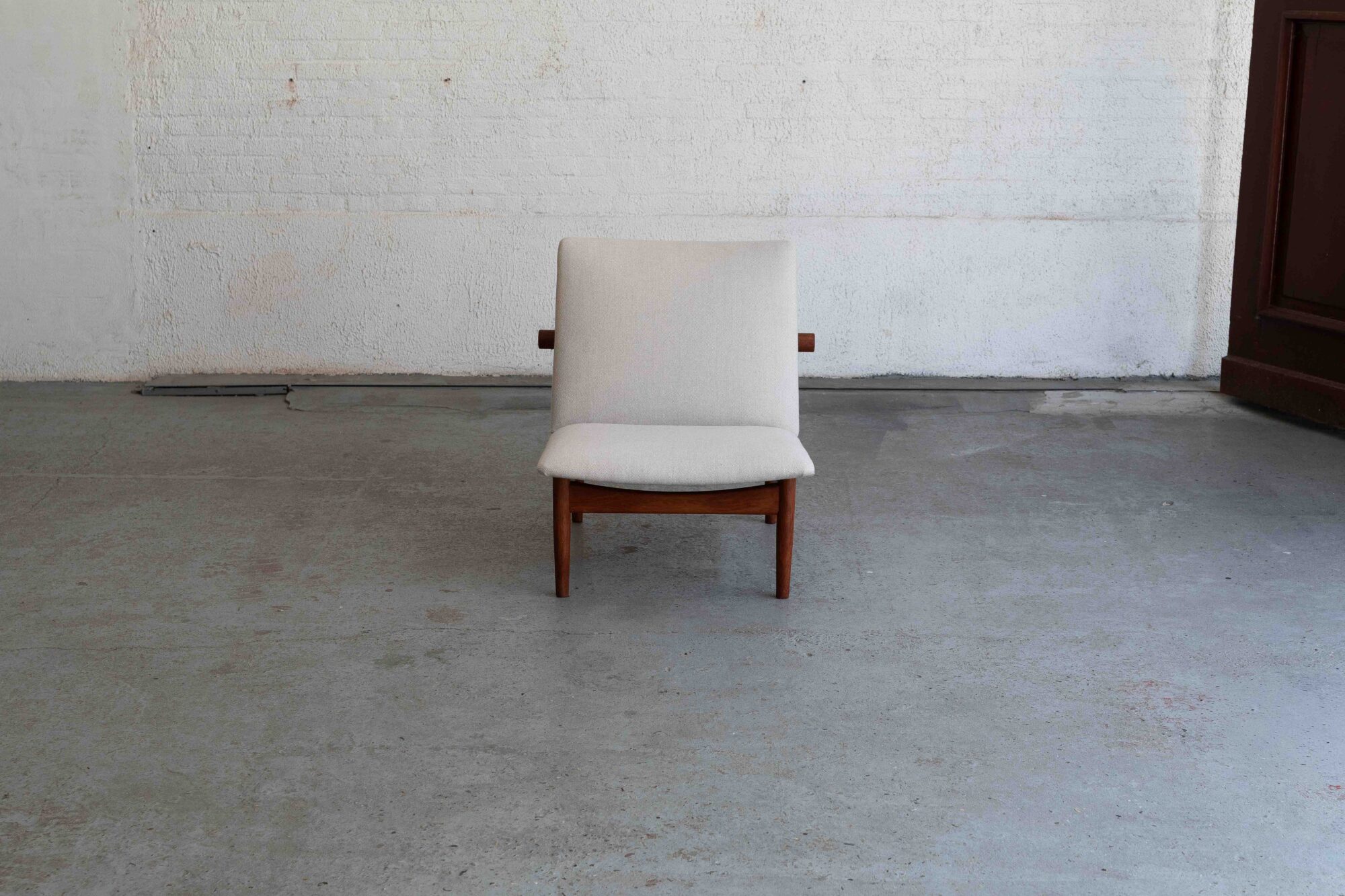
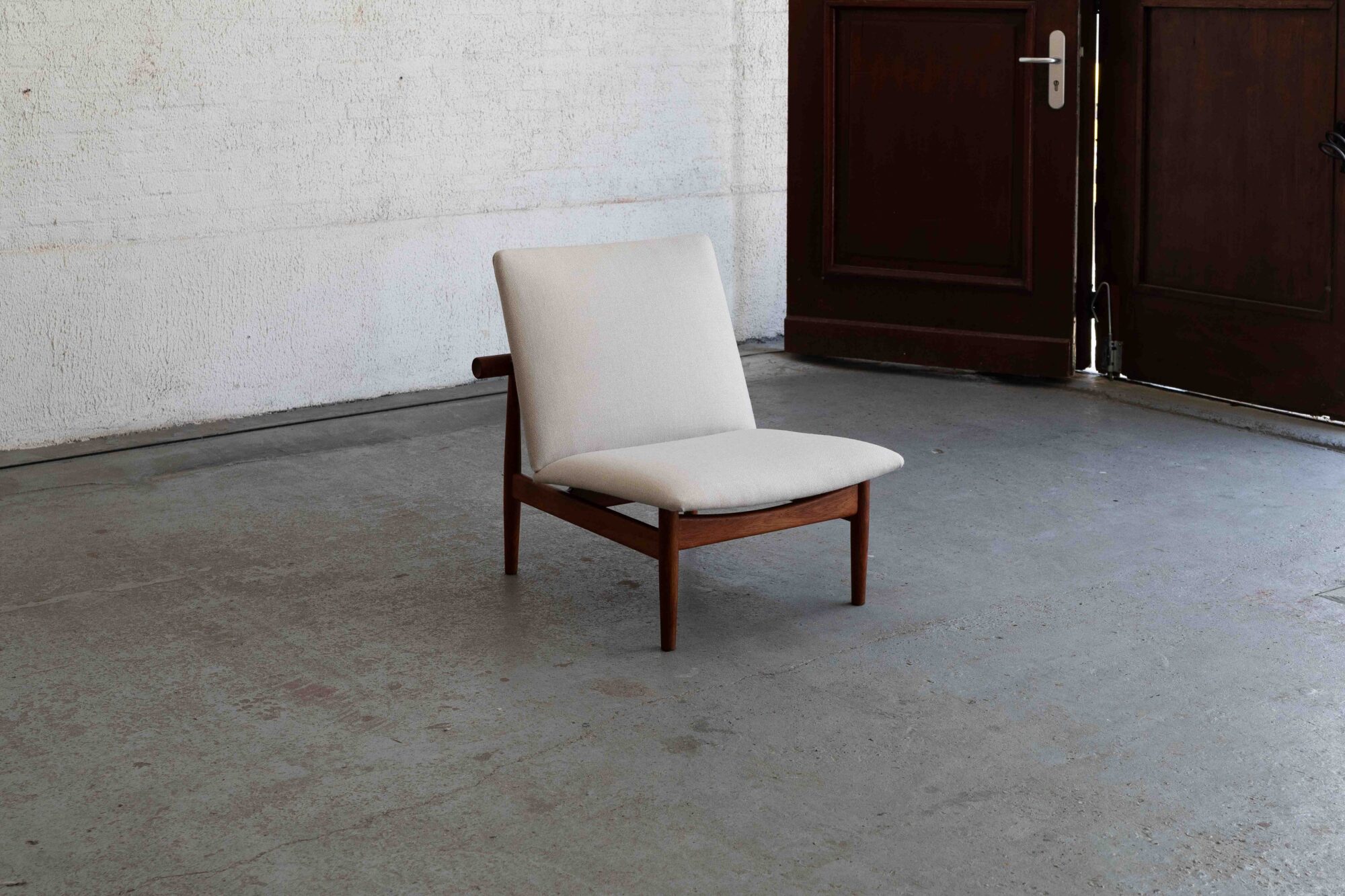
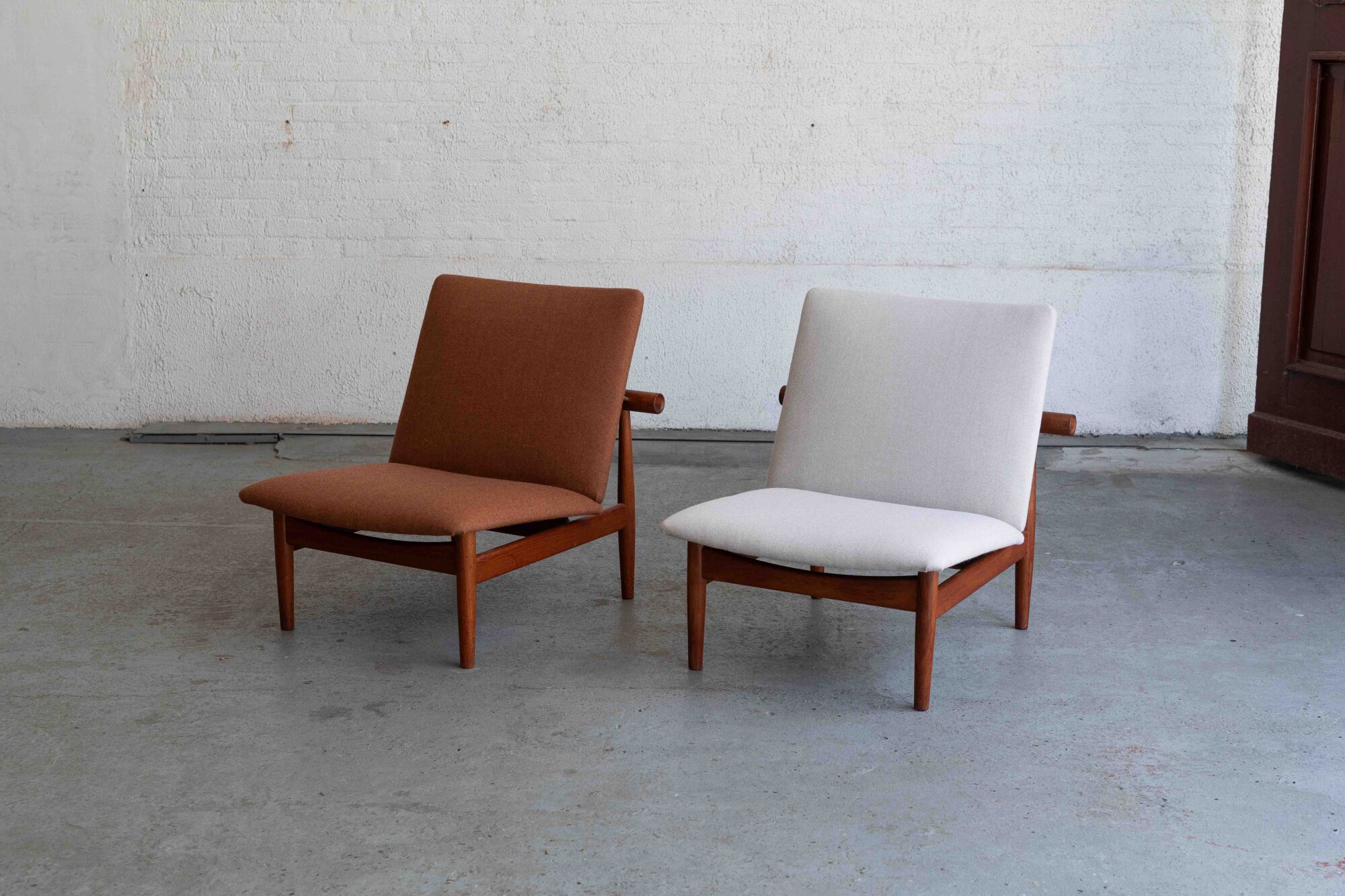
These 2 model ‘FD 137’ easy chairs, better known as ‘Japan chairs’, were designed by Finn Juhl in 1957 and produced by France and Son in Denmark.
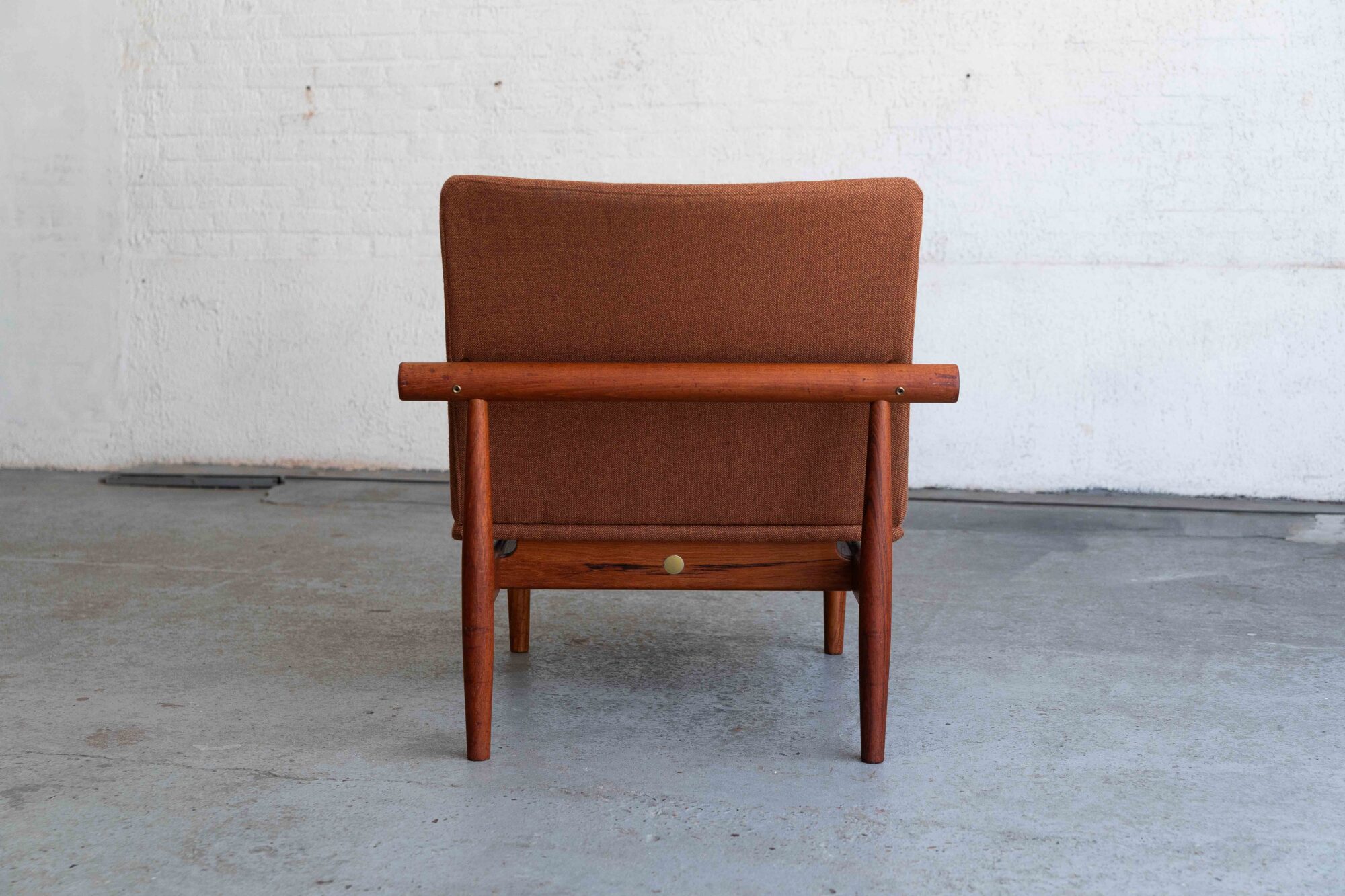
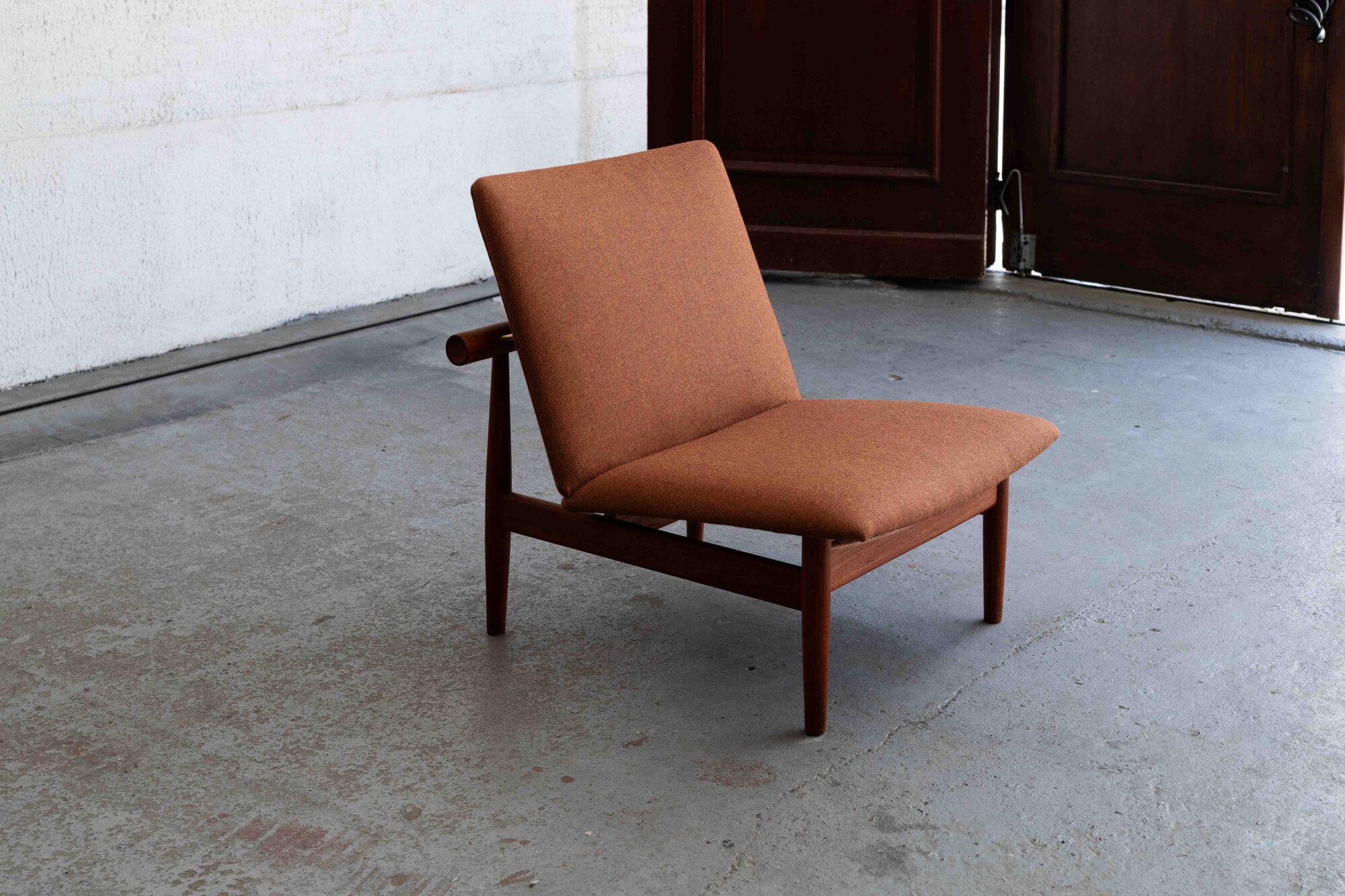
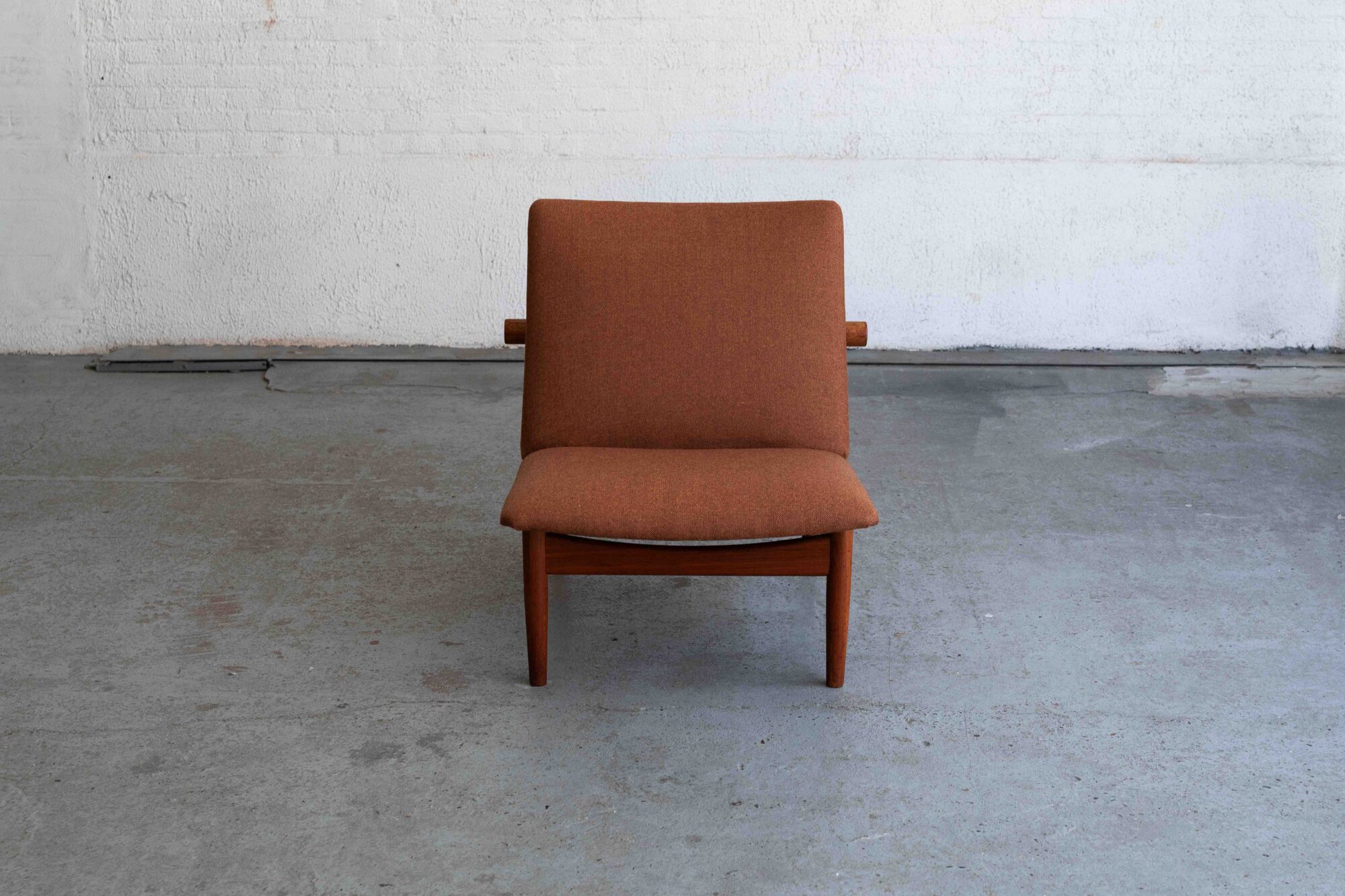
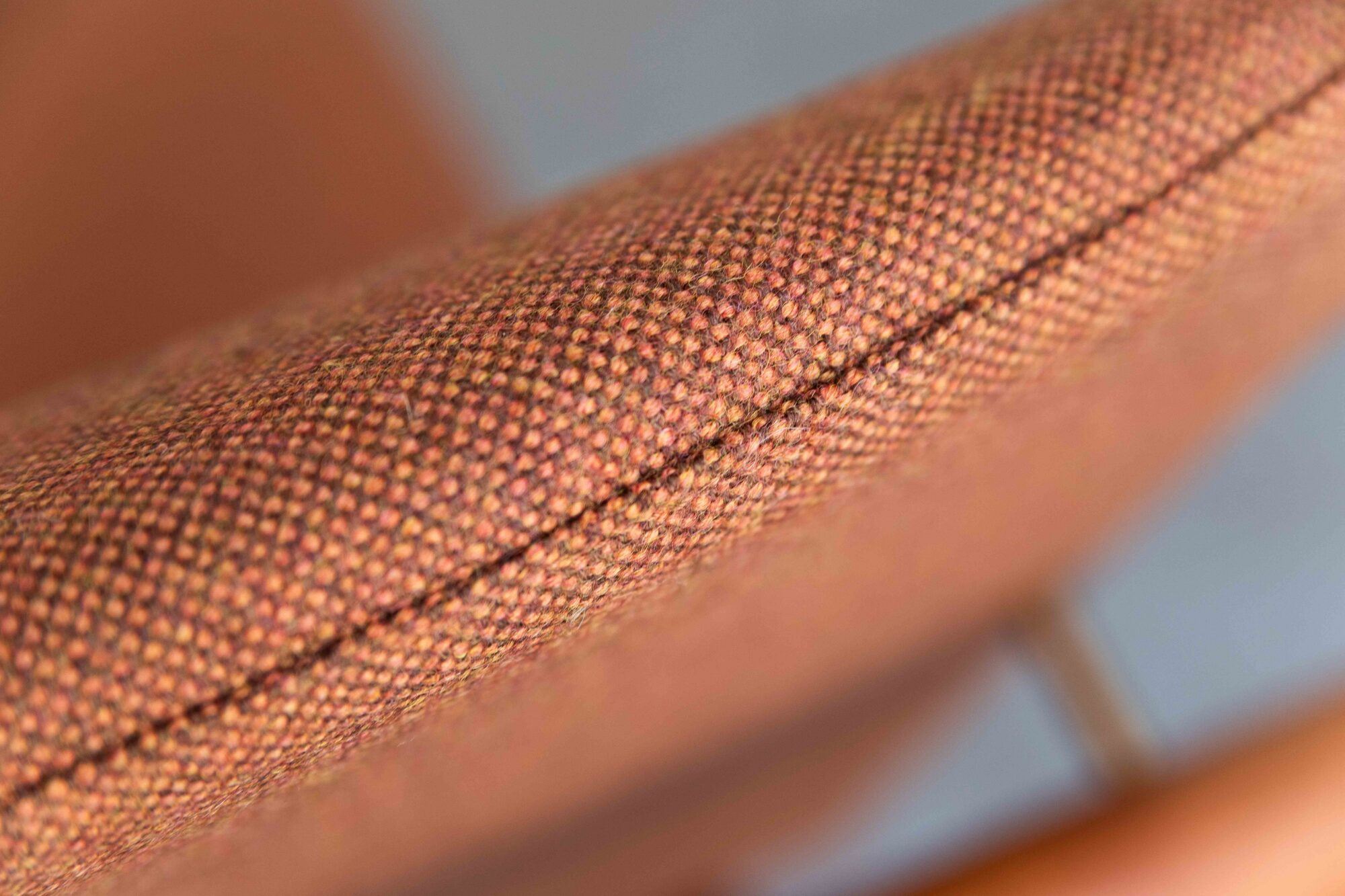
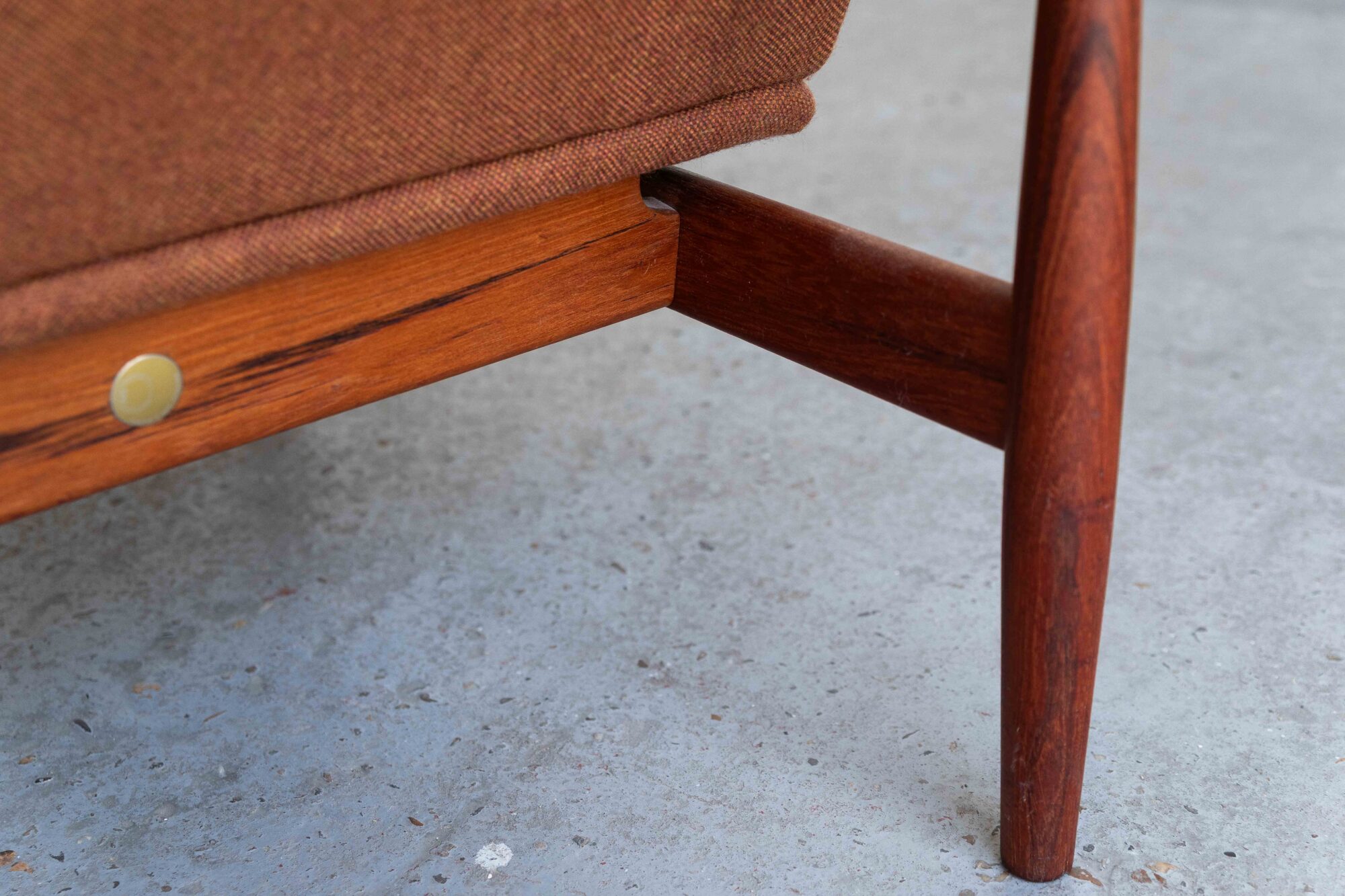
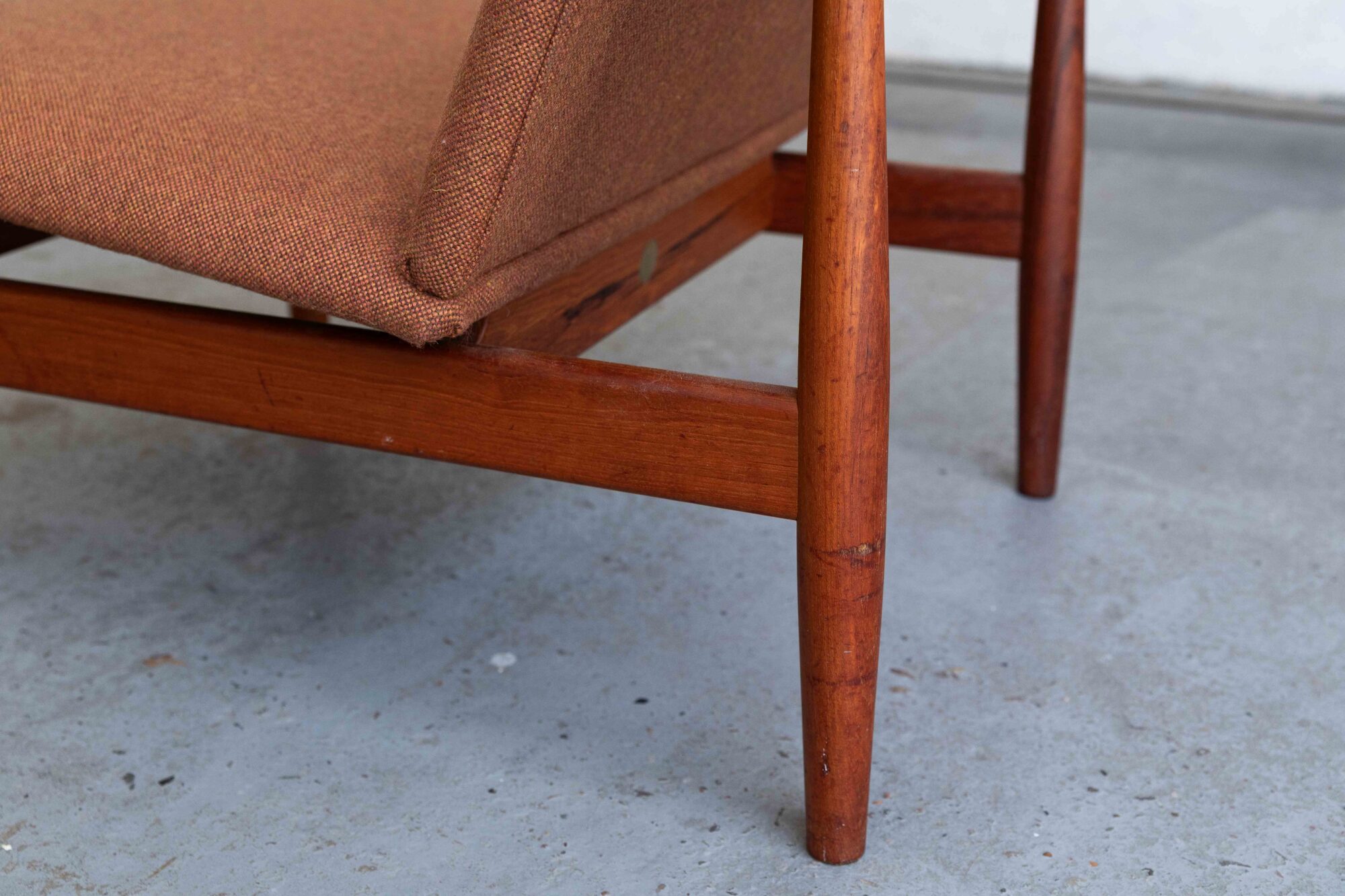
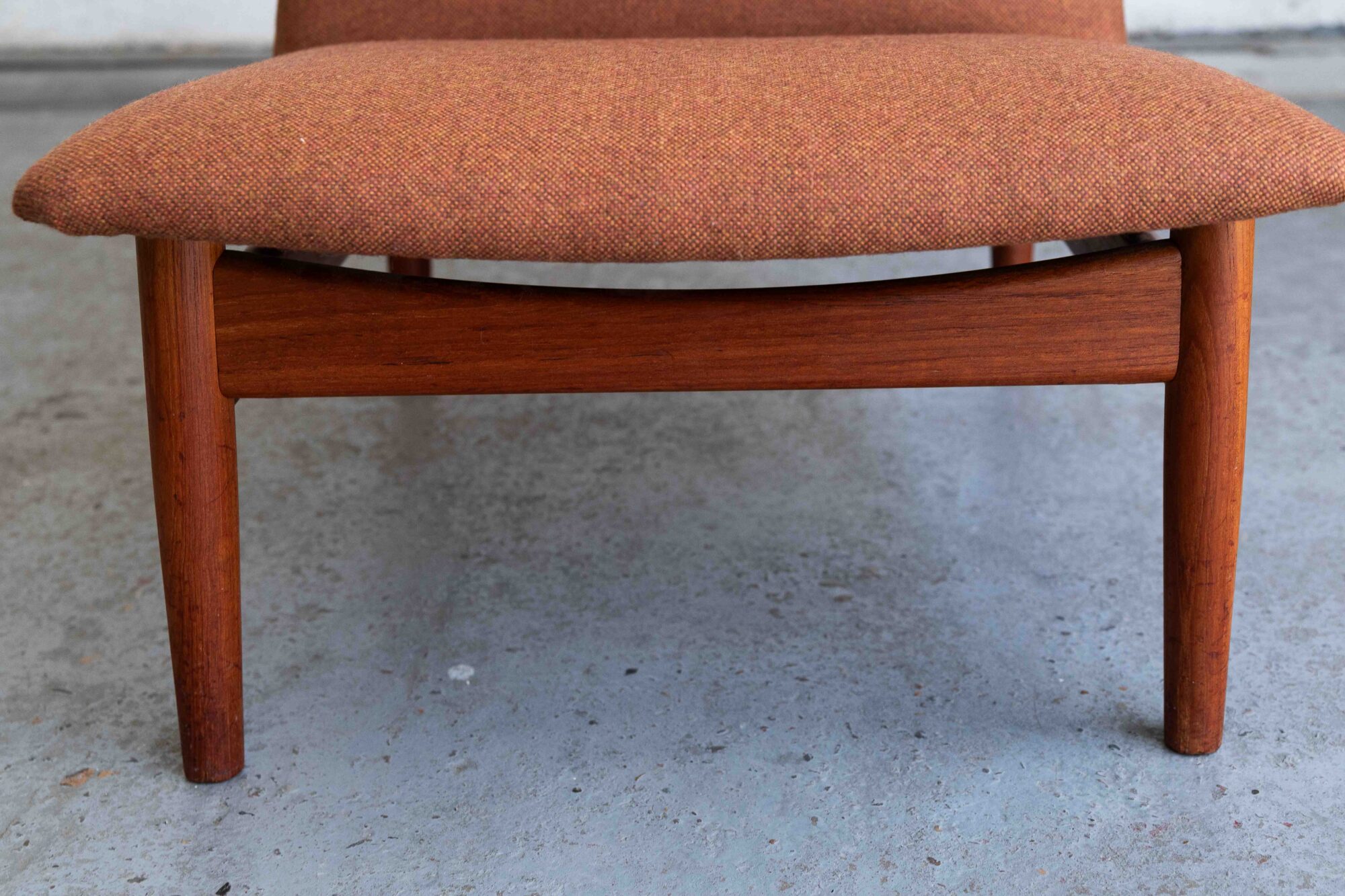
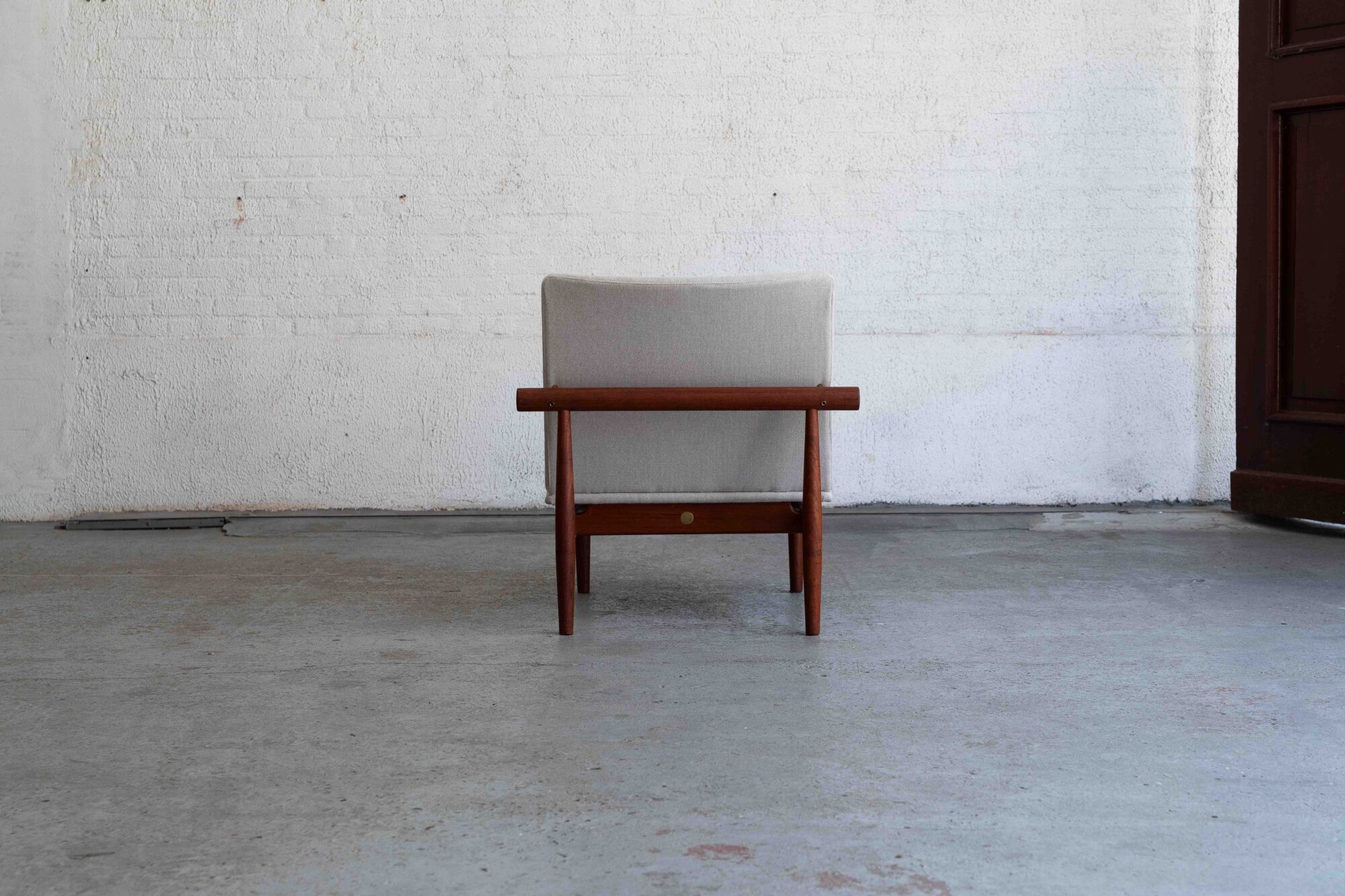
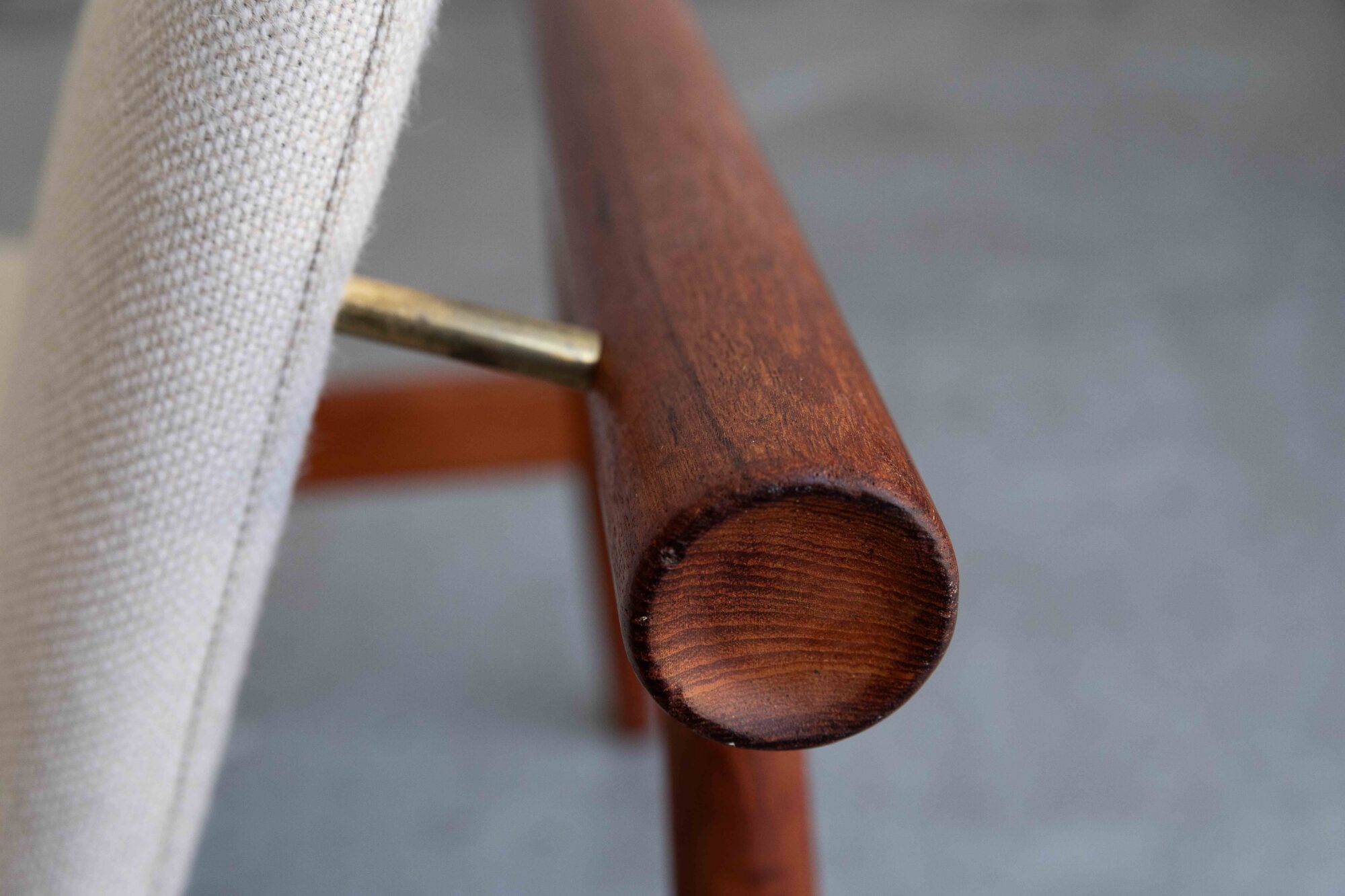
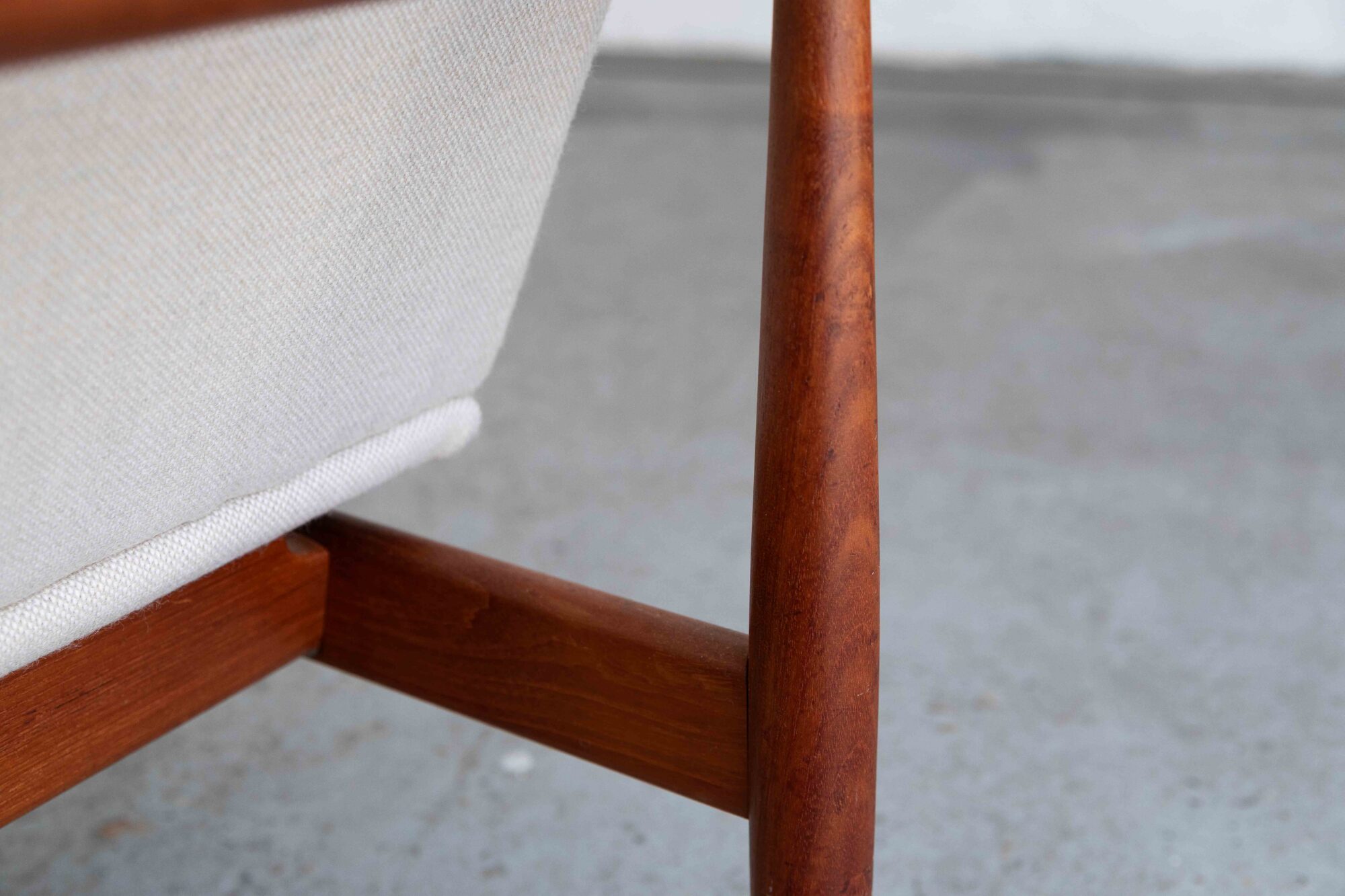
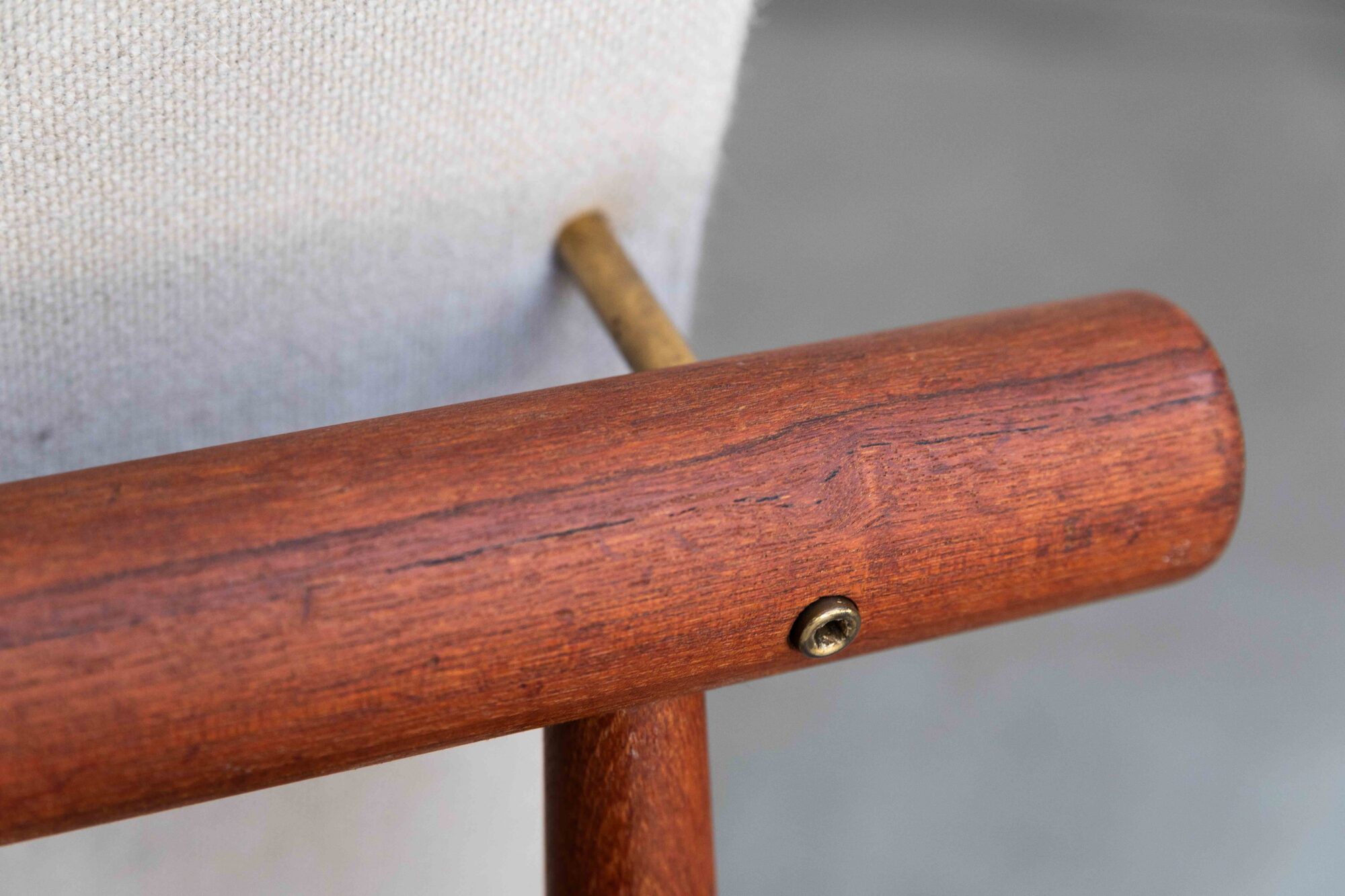
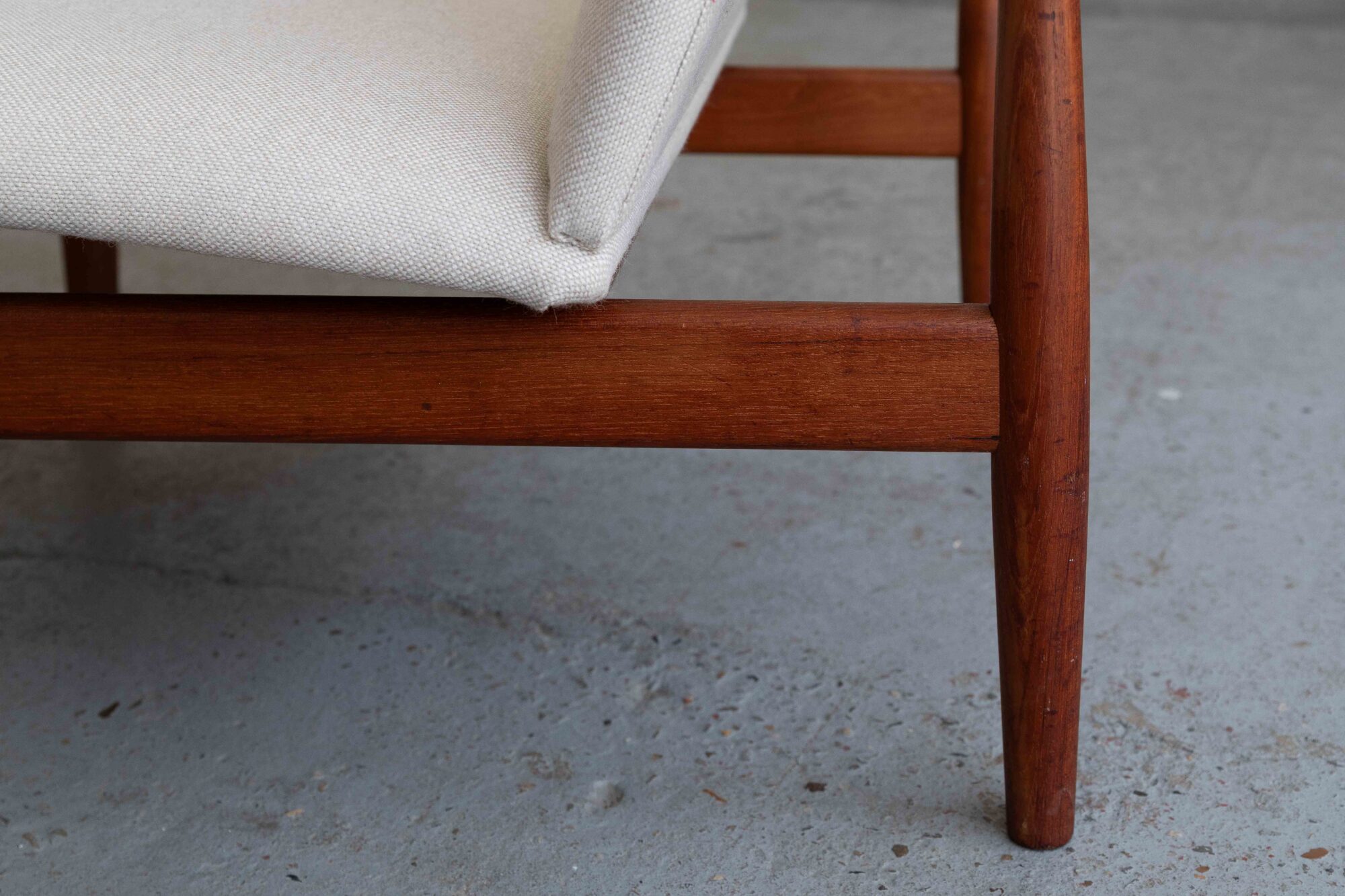
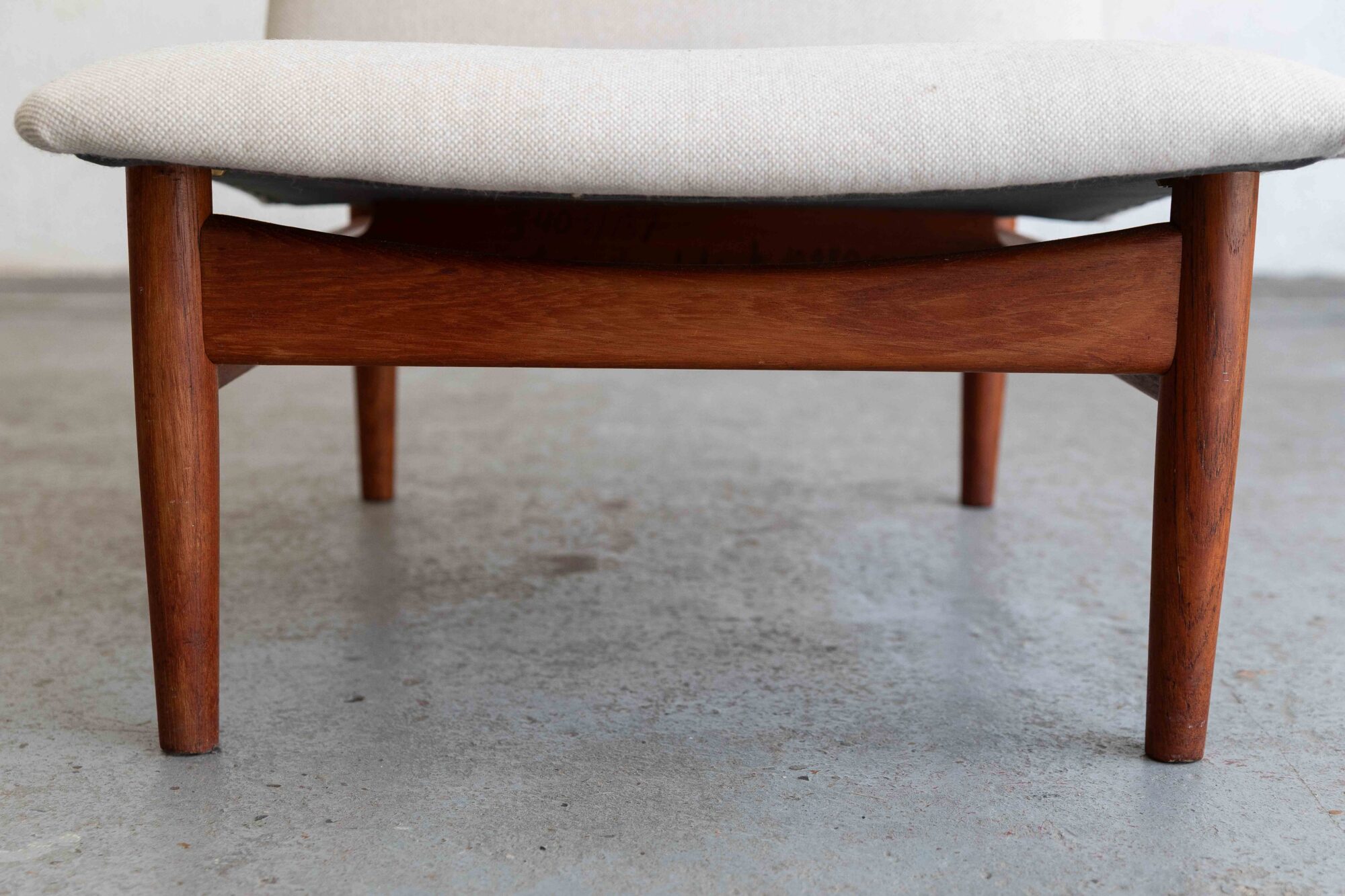
Regarded as one of the best examples of Danish mid-century modernism, the design of these rare easy chairs shows Juhl’s attention for sculptural forms, clean lines and great eye for comfort. The warm toned solid teak frames were combined here with brass details and a new comfortable upholstery in a high quality wool fabric. The seats look thin but the padding inside is generous and comfortable, there was new foam used underneath the seating, the backrests still have the original horsehair padding within. The design with its visible structure, minimalist lines and rounded sleeper behind the backrestis refers clearly to traditional Japanese architecture. We choose colours ‘Marble’ a creamy off-white and ‘Sienna’ a deep reddish-brown reminiscent of toasted clay or terracotta for the fabric. Two natural colours that go well together with the understated, minimalist elegance of the design.
The partnership with France & Son made it possible for Juhl to bring his refined designs into serial production while upholding a high level of craftsmanship. In this time period, France & Son was one of Denmark’s most innovative furniture manufacturers, well known for its forward-thinking techniques and collabs with leading designers.
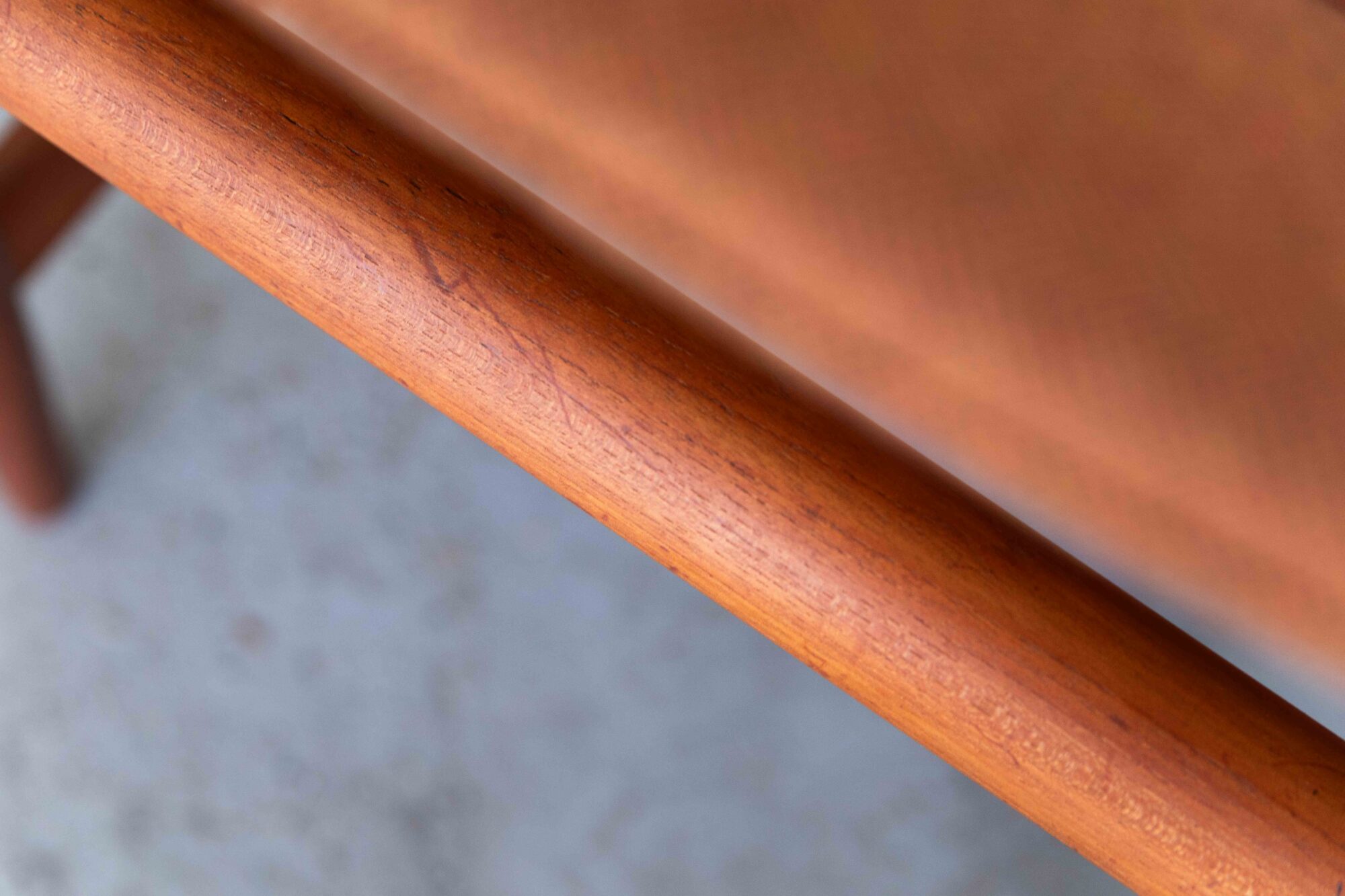
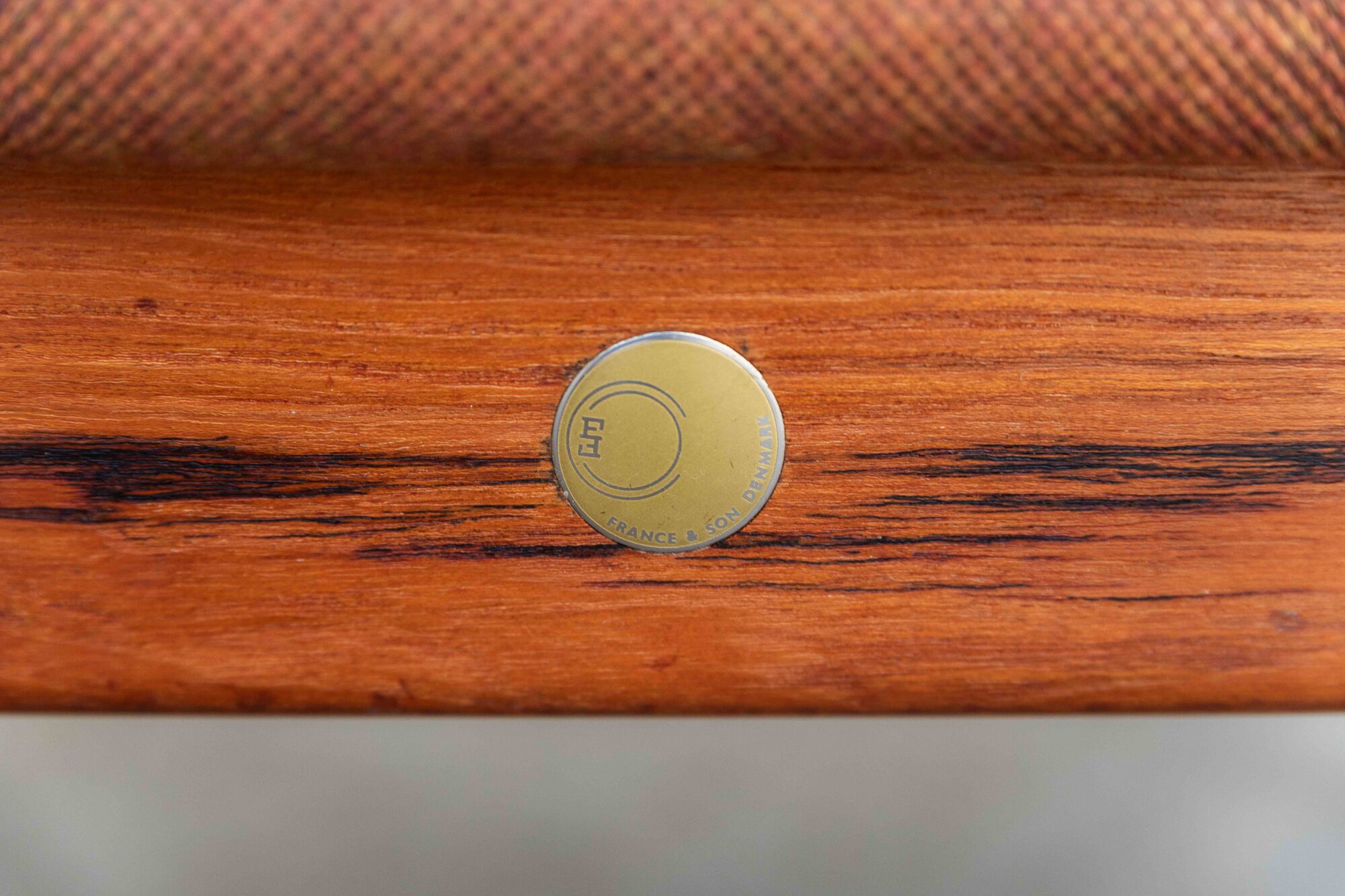
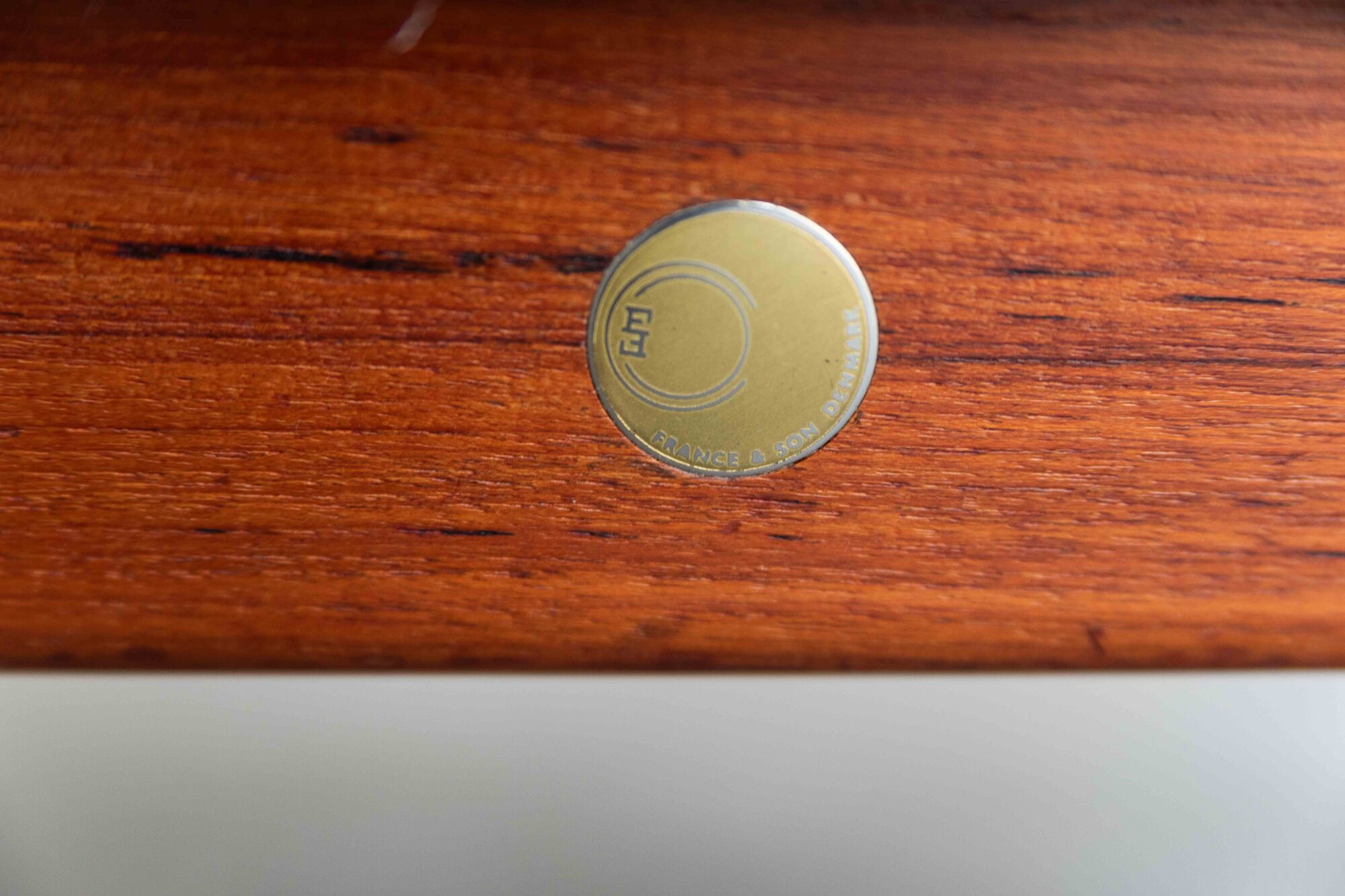
The grain of the wood looks beautiful and the frames have been refinished with a fresh layer of varnish. There are still some using marks and darker stains visible, especially on the backrest and the back of the back legs, the inside of the frame has also written markings on the underside of the chair, testament of the life these chairs have already lived. The original France & Son brass label is still present on both chairs. The new upholstery in wool is in pristine condition. These chairs are an anchor point in Danish design history and one of the pinnacles in Finn Juhl’s design legacy. They can also be sold separately for 3500 euro per chair.
Product / Model
Designer
Manufacturer
Country
Date
Product ID
Price
Dimensions:
W: 67 cm
D: 75 cm
H: 72 cm
Seating H: 30 cm
Weight: approx. 15 kilo /piece
Material:Teak, wool, brass
Finn Juhl was born on 30 January 1912 in Copenhagen, Denmark.
As a young man, Juhl spent much of his time in museums and dreamed of becoming an art historian. He lost his mother after he was born in 1912 and his father, who was a successful textile wholesaler—insisted Finn studied a more practical profession and steered him toward architecture instead. Although he followed the path his father carved out for him, Juhl later said that art remained his primary source of inspiration.
Unlike many famous Danish furniture designers, Juhl was trained as an architect and considered himself largely self-taught as a furniture designer. He was not part of the traditional cabinetmaking school that shaped figures like Hans Wegner and Børge Mogensen. As an outsider, he could pursue artistic forms more freely, but it also meant his early work was often criticized for being too radical.
In 1942 Finn Juhl built a house for himself in Ordrup, north of Copenhagen. He saw this house not just as a residence, but more as a laboratory where he could test prototypes and refine ideas before releasing them into the world. He constantly changed the interiors and hoped to fill the house one day entirely with objects he designed himself. “When I build a house, I don’t like other people coming in and ruining it”, was one quote that illustrates his perfectionism.
Juhl married Inge-Marie Skaarup in 1937, but the marriage ended in divorce. Later, beginning in 1961, he lived with Hanne Wilhelm Hansen, who came from the family behind the Danish music publisher Wilhelm Hansen. They remained together for the rest of his life. After his death in 1989, Hansen carefully preserved their home almost exactly as it had been; following her death in 2003, it became a museum that you can still visit today.
Visitors often describe the house as a “gesamtkunstwerk’ because every object was chosen or designed as a part of a larger composition and a distilled idea of Juhl’s vision.
Juhl’s lifetime (1912–1989) spanned a remarkable period in design history—from the rise of modernism between the World Wars through the global popularity of Scandinavian design in the postwar decades. In the 1940’s and 1950’s when Juhl created his most influential furniture designs, Danish Modern design was gaining international recognition. Also Hans Wegner and Borge Mogensen were determining figures in the same Danish Modern movement.
He died on 17 May 1989 at the age of 77.
We ship worldwide using trusted transport partners. Shipping costs depend on the item’s size, weight, value, and material. Each item is carefully packed using protective materials and, if needed, custom-made wooden crates. For overseas shipping, we always recommend crating.
Domestic Deliveries: In some areas we offer personal one man delivery at starting rates of 60 euro (Antwerp city and its districts). For other domestic destinations we work with Brenger at their rates, plus packing and handling fee. International Deliveries: We partner with trusted couriers like Magic Movers and Convelio. Once the item leaves our warehouse, the shipper bares full responsibility for any damage that may occur during handling or transport . We can offer shipping with full insurance. We kindly ask that you inspect your items upon delivery. Please check if your order is complete and unharmed. If you notice any issues, let us know right away so we can find a solution for you and any other party involved.